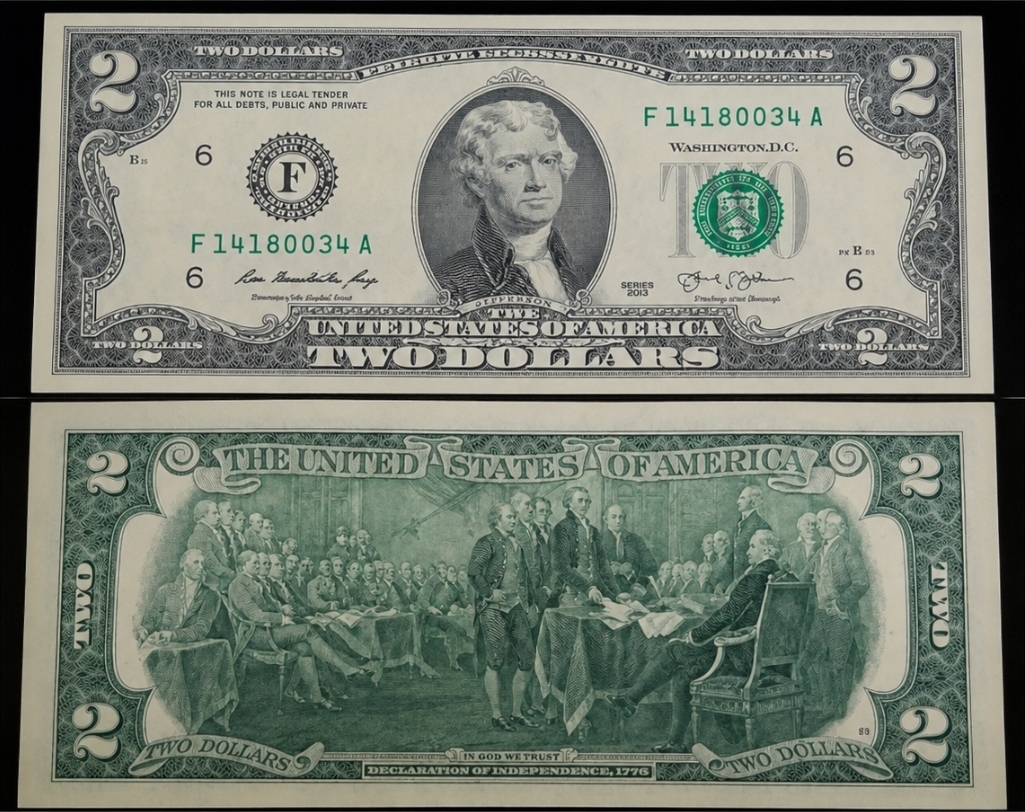
For many people, finding a $2 bill in a wallet, old drawer, or family collection feels unusual. Some people even believe the bill is rare because it is not commonly seen in everyday shopping. While millions of these notes have been printed over the years, certain versions can be surprisingly valuable to collectors depending on their condition, age, printing details, and historical significance.
The fascinating world of paper money collecting has continued to grow in popularity, especially as more people search through inherited collections, forgotten envelopes, and savings boxes hoping to uncover hidden treasures. A simple-looking $2 bill could sometimes be worth more than its face value, especially if it contains unique characteristics that attract collectors.
Before getting too excited, it is important to understand that not every $2 bill is rare or valuable. Many are still only worth two dollars. However, some examples have sold for significantly more due to scarcity, collector demand, or exceptional condition. Knowing what to look for can help you better understand whether your note is ordinary or potentially collectible.
The History Behind the $2 Bill
The United States first introduced the $2 bill in the 1860s. Over time, the design changed multiple times, featuring different portraits, seals, and layouts. Today, the most recognizable version displays Thomas Jefferson on the front and an image inspired by the signing of the Declaration of Independence on the back.
Although the note remains legal tender and is still printed today, it is not distributed as widely as other denominations. Because people do not encounter them frequently, many assume they are extremely rare. In reality, modern $2 bills are still produced, though they circulate less often than $1, $5, $10, or $20 bills.
Collectors are especially interested in older versions, limited print runs, replacement notes, unusual serial numbers, and bills that remain in pristine condition. Historical significance also plays a major role in determining value.
Why Some $2 Bills Become Valuable
Several factors can influence the collectible value of a $2 bill. Understanding these details is important before assuming a note is rare.
1. Age of the Bill
Older notes generally attract more collector attention. Bills printed decades ago may be harder to find in excellent condition because many were damaged, folded, or removed from circulation over time.
Notes from the late 1800s and early 1900s are often considered more collectible due to their historical importance and limited survival rate.
2. Condition Matters
Condition is one of the biggest factors in paper currency collecting. A crisp, uncirculated bill without folds, stains, tears, or writing is usually worth more than one that has heavy wear.
Collectors often look for bills with:
- Sharp corners
- Bright color
- No creases
- No ink marks
- Minimal handling damage
A heavily used note may still have collectible value if it is extremely rare, but condition often influences final pricing.
3. Rare Serial Numbers
Some collectors specifically seek unusual serial numbers. Even modern bills can attract attention if they contain interesting number patterns.
Popular serial numbers may include:
- Repeating digits
- Low numbers
- Radar patterns
- Solid numbers
- Ladder sequences
For example, a serial number like 00000025 or 77777777 may interest collectors more than an ordinary sequence.
4. Star Notes
Replacement notes, often called “star notes,” feature a small star symbol in the serial number. These are printed to replace defective bills during production.
Because fewer are produced compared to regular notes, certain star notes may carry higher collector value, especially when combined with rare years or excellent condition.
5. Printing Errors
Occasionally, bills leave the printing facility with unusual mistakes. These printing errors can become highly collectible because they are uncommon.
Examples may include:
- Misaligned printing
- Ink smears
- Missing seals
- Off-center designs
- Double printing
Collectors often pay attention to verified error notes because they are considered unique pieces of printing history.
Common Types of $2 Bills
Not all $2 bills are the same. Different series and designs have appeared over the years.
Large Size Notes
Older $2 bills printed before 1928 were physically larger than modern currency. These large-size notes are often highly collectible because of their age and historical appearance.
Small Size Notes
Beginning in 1928, U.S. currency adopted the smaller size still used today. Many collectors focus on these versions because they are easier to store and widely available in various series.
Bicentennial Era Notes
The 1976 series became especially famous because it marked the United States Bicentennial celebration. Many people saved these notes as souvenirs, which means large quantities still exist today. While most are not extremely valuable, pristine uncirculated examples may attract collector interest.
How to Check If Your $2 Bill Could Be Valuable
If you discover a $2 bill and want to learn more about it, there are several things you can examine carefully.
Look at the Year
The series year appears on the front of the note. Older years may attract more interest, especially if the bill remains in good condition.
Inspect the Serial Number
Take a close look at the serial number for unusual patterns or low digits. Collectors often enjoy unique combinations that stand out from ordinary sequences.
Search for a Star Symbol
A small star near the serial number could indicate a replacement note. Some star notes are more collectible than standard versions.
Examine Overall Condition
Try not to fold or damage the bill further. Even small defects can impact collector value. If the note appears crisp and clean, it may be worth preserving carefully.
Check for Printing Errors
Look closely for unusual printing features or alignment problems. Genuine error notes can sometimes become highly sought after.
Why People Collect Paper Money
Currency collecting combines history, design, art, and economics into one hobby. Many collectors enjoy learning how paper money evolved through different generations.
Some people focus on historical notes connected to important events, while others enjoy searching for unusual serial numbers or rare printing variations. Collecting can also become a family tradition, with older bills passed down through generations.
For some collectors, the excitement comes from the possibility of finding an overlooked treasure hidden in everyday circulation.
Can Modern $2 Bills Become Valuable?
Modern notes are usually easier to find, but that does not mean they are completely without collector interest. Certain modern bills with special serial numbers, star notes, or flawless uncirculated condition may still attract buyers.
However, many recently printed $2 bills remain close to face value because large quantities still exist. Collector demand, rarity, and condition all influence potential worth.
Important Tips Before Selling Any Bill
If you believe your note may be collectible, it is wise to research carefully before attempting to sell it.
- Handle the bill gently
- Avoid cleaning or altering it
- Store it in a protective sleeve if possible
- Compare it with verified collector references
- Seek opinions from reputable currency experts
Prices in the collector market can vary widely depending on demand and authenticity. Some notes may receive high interest while others remain common despite appearing old.
The Growing Interest in Hidden Treasures
Stories about valuable coins and currency continue to capture public attention. Many people enjoy checking spare change, old collections, or inherited items hoping to discover something special.
While most everyday bills are worth their printed value, the possibility of finding a rare collectible keeps interest alive among hobbyists and casual treasure hunters alike.
The $2 bill remains one of the most talked-about pieces of U.S. currency because of its unusual reputation and distinctive appearance. Whether valuable or not, it continues to spark curiosity whenever it appears in circulation.
Final Thoughts
Your $2 bill may or may not be worth more than two dollars, but learning about its history and features can still be fascinating. Factors such as age, condition, rarity, serial numbers, and printing errors all play important roles in determining collector interest.
Even if your note turns out to be common, it still represents a unique part of American currency history. For collectors, every bill tells a story about the era in which it was printed and circulated.
Checking old bills can be an enjoyable hobby, especially for those interested in history, collectibles, and hidden treasures. Sometimes the smallest discoveries create the biggest excitement.
Disclaimer: This article is intended for informational and entertainment purposes only. Values mentioned can vary depending on market demand, condition, and professional evaluation. The image associated with this content may be digitally created or enhanced using AI-generated elements.
Do you have a rare $2 bill? Please let us know what you think of this story and make sure you share it with your friends!