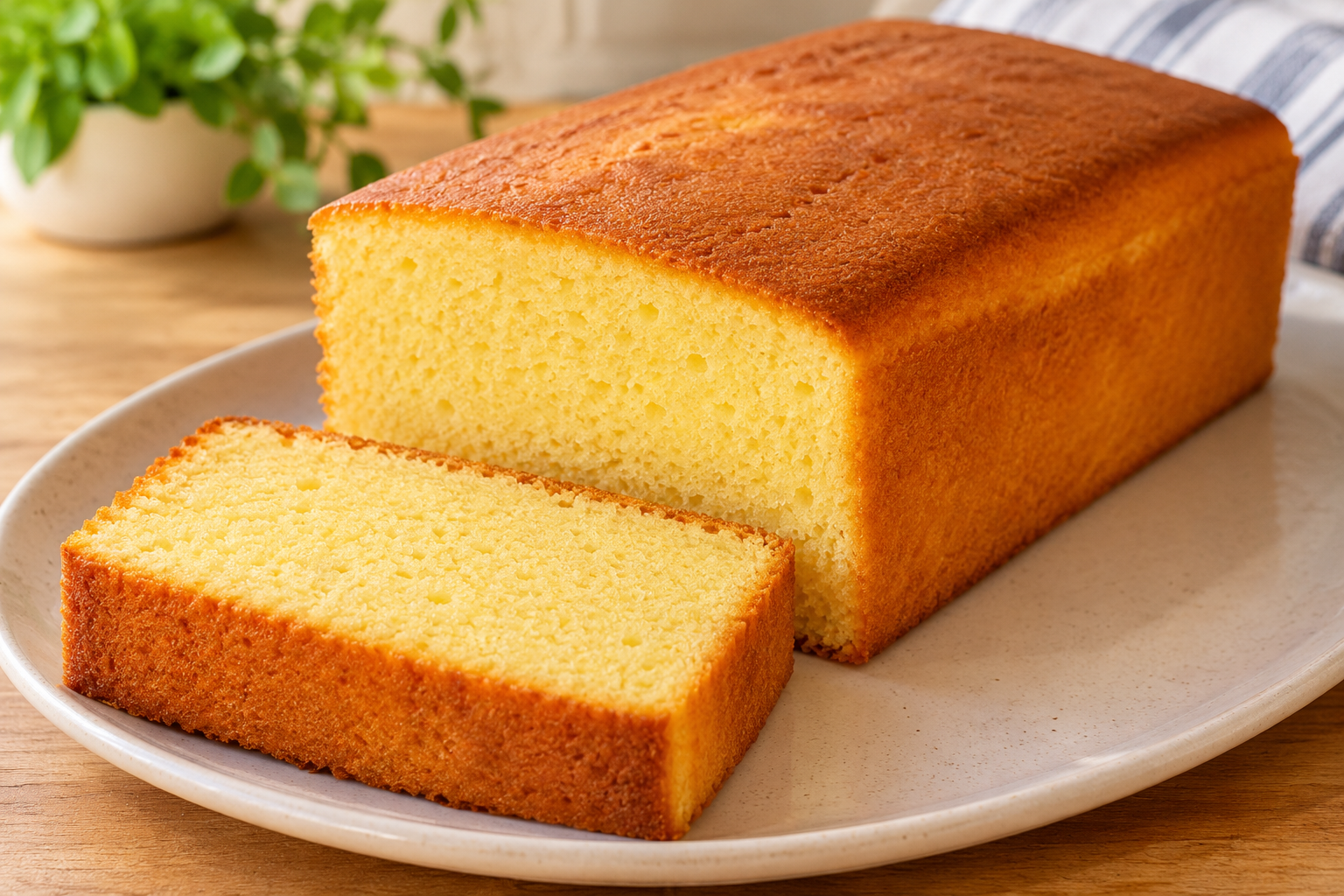
Making a delicious homemade cake does not always require eggs. This soft eggless vanilla cake is a simple baking recipe made with everyday ingredients, including milk, yogurt, flour, sugar, and vanilla. It has a beautiful golden-brown surface, a delicate yellow interior, and a tender crumb that makes it perfect for cutting into thick slices.
Whether you avoid eggs, have run out of them, or simply want to try a different homemade dessert, this easy eggless cake is a lovely option. The combination of yogurt, milk, and vegetable oil helps create a moist texture, while baking powder and baking soda help the batter rise during baking.
Unlike complicated desserts that require several preparation stages, this recipe uses a straightforward mixing method. You do not need an electric mixer or special baking equipment. A couple of mixing bowls, a whisk, and a rectangular baking pan are enough to prepare the batter.
The finished cake has a mild vanilla flavor and a lightly sweet taste. It can be served on its own or accompanied by fresh fruit, powdered sugar, honey, coffee, or tea.
If you are looking for a simple homemade cake without eggs, this recipe is a practical addition to your baking collection.
Why You Will Love This Eggless Vanilla Cake
There are several reasons why this homemade cake is worth trying.
- Completely egg-free: The recipe does not use whole eggs, egg yolks, or egg whites.
- Simple preparation: You can mix the ingredients using an ordinary whisk and spatula.
- Everyday ingredients: Most of the ingredients are commonly available in grocery stores.
- Moist texture: Yogurt and vegetable oil contribute to a tender cake.
- Mild vanilla flavor: Its simple flavor makes it suitable for different occasions.
- Easy to slice: After cooling, the cake can be cut into neat rectangular portions.
- Versatile serving options: Enjoy it plain or add your favorite toppings.
Ingredients for Eggless Vanilla Cake
For one rectangular cake, approximately 9 x 5 inches, prepare the following ingredients:
- 250 g all-purpose flour
- 150 g granulated sugar
- 180 ml whole milk
- 80 ml neutral vegetable oil
- 120 g plain unsweetened yogurt
- 1 tablespoon honey
- 1 tablespoon cornstarch
- 1 1/2 teaspoons baking powder
- 1/2 teaspoon baking soda
- 1 teaspoon vanilla extract
- 1 teaspoon white vinegar or lemon juice
- 1/4 teaspoon salt
Optional: A tiny pinch of turmeric can be added for a slightly warmer yellow color. Use only a very small amount to avoid changing the flavor.
Understanding the Ingredients
Each ingredient contributes something different to the final texture and flavor.
All-Purpose Flour
Flour provides the main structure of the cake. It helps the batter hold together and gives the finished dessert its shape.
Accurate measurement is important when preparing eggless cakes. Too much flour can make the cake heavier and drier.
For the most consistent results, use a kitchen scale. If measuring with cups, spoon the flour into the measuring cup and level it without pressing it down.
Granulated Sugar
Sugar provides sweetness and contributes to the cake’s color and moisture.
Regular white granulated sugar works well for this recipe.
Milk
Milk provides liquid for the batter and contributes to its consistency.
Whole milk is recommended for a richer flavor. Unsweetened plant-based milk can also be used as an alternative, although the final texture may vary.
Plain Yogurt
Plain yogurt is an important ingredient in this eggless recipe.
It adds moisture and acidity, helping create a tender texture. Its acidity also reacts with baking soda during preparation.
Choose plain, unsweetened yogurt rather than flavored varieties.
Vegetable Oil
Vegetable oil helps keep the cake moist.
A neutral oil such as sunflower or canola oil is recommended because it does not overpower the vanilla flavor.
Honey
A small amount of honey adds sweetness and helps contribute to the golden appearance of the baked surface.
Cornstarch
Cornstarch helps create a more delicate crumb when combined with all-purpose flour.
It is used in a small quantity so the cake retains enough structure to hold together when sliced.
Baking Powder and Baking Soda
These ingredients help the cake rise during baking.
Baking powder provides leavening, while baking soda reacts with acidic ingredients such as yogurt and vinegar.
Fresh raising agents are important for good results.
Vanilla Extract
Vanilla gives the cake its familiar homemade bakery aroma.
Pure vanilla extract is a good choice, although regular vanilla flavoring can also be used.
Vinegar or Lemon Juice
A small amount of vinegar or lemon juice provides additional acidity.
When combined with baking soda, it helps produce carbon dioxide, which contributes to the cake’s rise.
How to Make Eggless Vanilla Cake
Follow these steps to prepare the batter and bake the cake.
Step 1: Prepare the Oven and Baking Pan
Preheat the oven to 170°C (340°F).
Choose a rectangular loaf pan measuring approximately 9 x 5 inches.
Line the pan with parchment paper, leaving some extra paper over the sides to make removing the cake easier.
Lightly grease the parchment paper if necessary.
Preparing the pan before mixing the batter is helpful because the raising agents begin working once the wet and dry ingredients are combined.
Step 2: Combine the Dry Ingredients
In a large mixing bowl, add the all-purpose flour, cornstarch, baking powder, baking soda, and salt.
Whisk everything together until evenly distributed.
For a smoother batter, sift the flour mixture once to remove larger lumps.
Set the bowl aside.
Step 3: Mix the Wet Ingredients
In another bowl, add the granulated sugar, milk, plain yogurt, vegetable oil, honey, and vanilla extract.
Whisk until the ingredients are evenly combined and the mixture looks smooth.
Add the vinegar or lemon juice and stir gently.
Step 4: Combine the Wet and Dry Mixtures
Gradually add the dry ingredients to the wet mixture.
Use a whisk or spatula to combine them gently.
Continue mixing only until the flour is incorporated and the batter becomes smooth.
Avoid beating the batter for too long. Excessive mixing can develop too much gluten in the flour, which may result in a tougher cake.
The finished batter should be thick but pourable.
Step 5: Transfer the Batter to the Pan
Pour the prepared batter into the lined rectangular baking pan.
Use a spatula to spread it evenly, paying attention to the corners.
Gently tap the pan against the countertop once or twice to release large air bubbles.
Smooth the surface before placing the pan in the oven.
Step 6: Bake Until Golden
Place the baking pan on the middle rack of the preheated oven.
Bake at 170°C (340°F) for approximately 45–55 minutes.
The exact baking time depends on the oven and the baking pan.
Avoid opening the oven during the first 35 minutes because the cake needs time to rise and set.
If the surface becomes too dark before the center is fully baked, loosely cover the cake with aluminum foil.
To check whether the cake is ready, insert a wooden toothpick into the center.
If it comes out clean or with a few moist crumbs, the cake is ready. If wet batter sticks to it, continue baking for several more minutes and check again.
Step 7: Cool Before Slicing
Remove the cake from the oven and allow it to rest in the pan for approximately 10–15 minutes.
Carefully lift it out using the parchment paper and transfer it to a cooling rack.
Allow the cake to cool completely before slicing.
Cutting an eggless cake while it is still hot can cause the soft interior to crumble or appear sticky.
Use a sharp serrated knife to cut even slices.
Tips for Getting a Soft and Tender Cake
A few simple baking practices can make a noticeable difference in the finished result.
Measure the Flour Correctly
Too much flour can make the cake dry and dense.
A kitchen scale provides the most reliable measurements. If using measuring cups, avoid packing the flour into the cup.
Use Room-Temperature Ingredients
Milk and yogurt should ideally be at room temperature before mixing.
This helps the ingredients combine more evenly.
Avoid Overmixing
Once the flour has been added, mix gently.
Overmixing can develop gluten and affect the softness of the cake.
Check the Freshness of Baking Powder
Old baking powder may lose its effectiveness and prevent the cake from rising properly.
Store baking ingredients in dry, airtight containers.
Maintain the Correct Oven Temperature
An oven that is too hot may brown the outside before the center is fully baked.
An oven thermometer can help check the actual temperature.
Allow the Cake to Cool Completely
Cooling allows the internal structure to settle and makes it easier to cut clean slices.
Common Eggless Cake Problems and Solutions
Even a simple cake recipe can sometimes produce unexpected results. Understanding common baking problems can help you improve your results.
Why Is My Eggless Cake Dense?
A dense cake can result from excessive flour, overmixing, old baking powder, or an incorrect oven temperature.
Measure the ingredients carefully and mix the batter only until combined.
Why Is the Center Still Wet?
The center may remain underbaked if the cake is removed too early or if the oven temperature is too high.
Continue baking in short intervals and cover the top loosely with foil if necessary.
Why Did My Cake Sink in the Middle?
A cake may sink if the oven door is opened too early, the batter contains too much liquid, or the center has not baked completely.
Accurate measurements and a fully preheated oven help reduce this problem.
Why Is the Cake Dry?
Too much flour, excessive baking time, or a hotter-than-expected oven can cause dryness.
Check the cake before the maximum baking time and avoid leaving it in the oven longer than necessary.
Why Is the Top Too Dark?
Honey and sugar contribute to browning.
If the surface becomes dark too quickly, loosely cover the pan with aluminum foil and continue baking until the center is done.
Ingredient Substitutions
You can make a few adjustments depending on the ingredients available in your kitchen.
Can You Replace Whole Milk?
Yes. Unsweetened oat milk or soy milk can be used instead of whole milk.
Choose an unflavored variety to avoid changing the vanilla taste.
Can You Replace Vegetable Oil With Butter?
Yes. Approximately 100 g of melted butter can replace the vegetable oil.
Allow the butter to cool slightly before adding it to the wet ingredients.
The flavor and texture may be somewhat different.
Can You Use Greek Yogurt?
Yes. Plain Greek yogurt can be used, although it is thicker than regular yogurt.
If the batter becomes too thick, add a small amount of additional milk.
Can You Replace Honey?
Yes. Maple syrup can be used instead, although it may slightly change the flavor and browning.
Different Ways to Serve Eggless Vanilla Cake
One advantage of a simple vanilla cake is that it can be served in several ways.
Serve It Plain
Allow the cake to cool and cut it into thick slices.
Its mild vanilla flavor makes it enjoyable without additional toppings.
Add Powdered Sugar
A light dusting of powdered sugar gives the cake a simple decorative finish.
Serve With Fresh Fruit
Fresh strawberries, blueberries, raspberries, or sliced peaches complement the sweetness of the cake.
Add a Little Honey
A small drizzle of honey adds extra sweetness and a pleasant flavor.
Pair It With Coffee or Tea
This cake is suitable for afternoon coffee or tea.
Its simple flavor makes it an easy dessert to serve to family members and guests.
How to Store Eggless Vanilla Cake
Proper storage helps maintain the cake’s texture and flavor.
At Room Temperature
After the cake has cooled completely, place it in an airtight container.
In a cool environment, it can generally be kept for up to 2 days.
Avoid leaving it uncovered because exposure to air can dry out the surface.
In the Refrigerator
For longer storage, place the cake in an airtight container and refrigerate it.
It can generally be stored for approximately 4–5 days.
Allow refrigerated slices to sit at room temperature briefly before serving if you prefer a softer texture.
In the Freezer
The cake can also be frozen in individual portions.
Wrap each completely cooled slice tightly and place the slices in a freezer-safe container or bag.
For the best quality, use within approximately 2 months.
Thaw the slices at room temperature before serving.
Frequently Asked Questions
Is This Cake Completely Egg-Free?
Yes. This recipe does not use eggs, egg whites, or egg yolks.
Can I Make This Cake Without an Electric Mixer?
Absolutely. A regular whisk and spatula are enough to prepare the batter.
Does Eggless Cake Taste Different From Regular Cake?
The flavor is similar to a simple vanilla cake, although the texture may differ slightly from a traditional cake made with eggs.
The yogurt, milk, and oil help create a moist and tender result.
Can I Make This Cake Dairy-Free?
You can experiment with unsweetened plant-based milk and a suitable dairy-free yogurt alternative.
However, the final texture may vary depending on the products used.
Also replace the honey with maple syrup or another suitable plant-based sweetener if you want the entire recipe to be vegan.
Can I Add Chocolate Chips?
Yes. You can gently fold a small amount of chocolate chips into the finished batter before transferring it to the baking pan.
Can I Add Lemon Flavor?
Yes. A little finely grated lemon zest can be added to the wet ingredients.
It provides a fresh citrus aroma that works well with vanilla.
Can I Bake This Cake in a Round Pan?
Yes. An approximately 8-inch round pan can be used.
However, the depth of the batter may change, so check the cake regularly and adjust the baking time as needed.
How Do I Know When the Cake Is Ready?
The surface should be golden, and a toothpick inserted into the center should come out without wet batter.
The sides may also begin to pull slightly away from the baking pan.
Can I Prepare the Batter in Advance?
It is best to bake the batter shortly after mixing.
The baking soda and baking powder begin working once the wet and dry ingredients are combined. Waiting too long may reduce their effectiveness.
Final Thoughts
This soft eggless vanilla cake is a practical homemade dessert made with simple ingredients and an easy preparation method.
It is a useful recipe when you want to bake without eggs while still enjoying a tender interior, a lightly golden surface, and a pleasant vanilla flavor.
The key to achieving good results is to measure the ingredients accurately, mix the batter gently, maintain the correct oven temperature, and allow the cake to cool completely before slicing.
Serve it plain, add fresh fruit, or enjoy it with your favorite hot drink. This homemade eggless cake is a simple addition to any collection of everyday baking recipes.