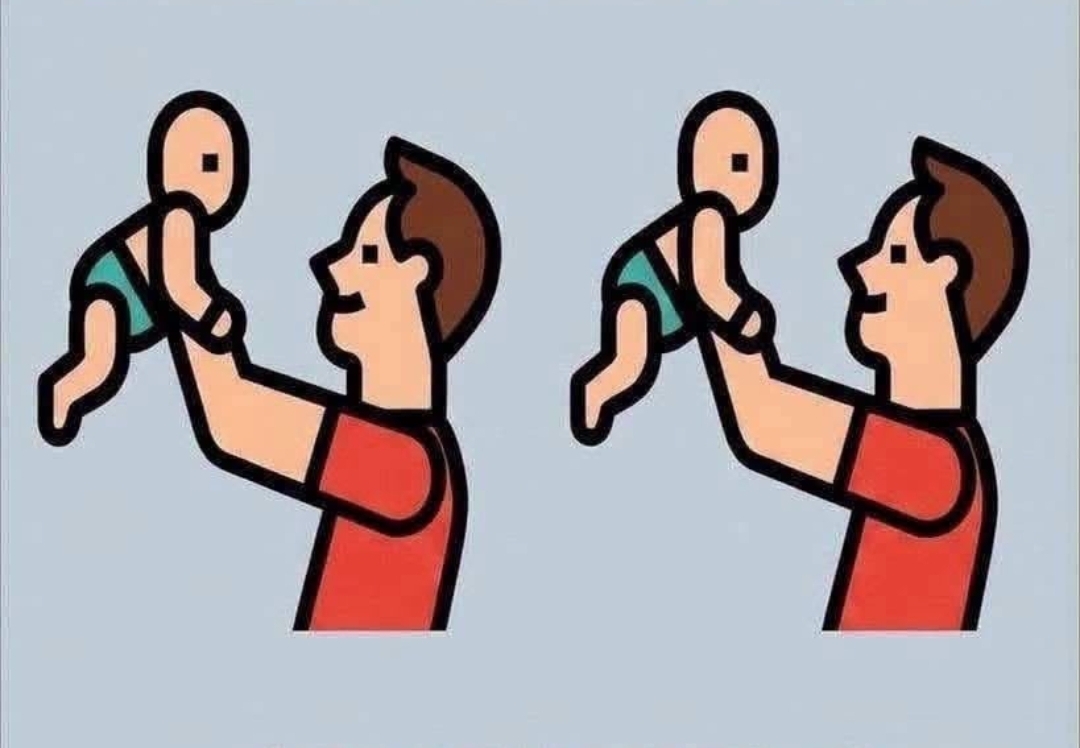
At first glance, the two pictures may appear to be completely identical. The colors, shapes, objects, and overall composition seem to match so closely that it is easy to believe there is no difference at all. However, one small detail has been changed, and finding it requires more than a quick glance.
This type of visual puzzle is designed to challenge observation, concentration, patience, and attention to detail. The hidden difference may be located in an area that seems unimportant, making it surprisingly difficult to notice even when the two images are placed side by side.
Why Is the Difference So Difficult to Find?
The human brain is remarkably efficient at processing visual information. When we look at a familiar scene, the brain does not carefully examine every individual line, shape, and object. Instead, it quickly recognizes the overall pattern and uses that information to understand what it is seeing.
This shortcut is extremely useful in everyday life. It allows us to recognize objects, understand our surroundings, read signs, and identify familiar patterns without consciously analyzing every small detail. However, that same efficiency can make subtle changes surprisingly easy to overlook.
When two nearly identical pictures are compared, the brain naturally focuses on the information that remains the same. Because the overall image looks familiar, a tiny alteration can blend into the surrounding details.
How to Find the Hidden Difference
Instead of staring at both pictures randomly, try using a systematic approach. Dividing the images into smaller sections can make the search easier and reduce the chance of repeatedly checking the same area.
- Start at one corner. Begin in the upper-left or upper-right corner and examine the image in an organized direction.
- Move slowly across the image. Compare the upper section before gradually moving toward the center.
- Check the lower section. Continue the same process through the bottom of the picture.
- Compare outlines. Look for small changes in an object’s shape, edge, size, or position.
- Check repeated objects. If several similar objects appear, compare each one carefully.
- Look at colors and patterns. A slightly different shade, missing mark, or altered pattern may reveal the answer.
- Pay attention to gaps and spacing. Sometimes the difference is not an object itself but the space surrounding it.
The goal is not simply to look harder. It is to look more systematically. Giving your eyes a clear path to follow can make subtle changes much easier to identify.
Don’t Rush the Puzzle
One of the biggest mistakes people make with visual puzzles is trying to solve them as quickly as possible. Once the brain decides that two images look the same, it can become surprisingly difficult to challenge that first impression.
Take your time and resist the temptation to immediately conclude that there is no difference. Move from one section to another and deliberately compare individual details. In many cases, the hidden change becomes obvious only after the image has been examined carefully.
It is also important to remember that this is a fun attention puzzle, not a scientific measurement of intelligence. Finding the answer quickly does not automatically mean someone is smarter, while taking longer does not mean someone has poor visual abilities. Different people simply notice different details at different speeds.
What Makes Spot-the-Difference Puzzles So Interesting?
These puzzles are entertaining because they take advantage of the way human visual perception normally works. Our brains constantly organize information into meaningful patterns. We identify the larger scene first and then use that understanding to interpret smaller details.
When a puzzle deliberately changes one small element, that normal process can work against us. The surrounding information tells the brain that the image is familiar, so the altered detail may not immediately stand out.
This is why someone can look directly at the correct area several times without noticing anything unusual. Once the difference is finally discovered, however, it often seems impossible to understand how it was missed in the first place.
A Better Strategy for Comparing Two Images
If you are having trouble finding the answer, imagine dividing both pictures into several sections. Compare the corresponding areas one at a time instead of looking at the entire image simultaneously.
For example, begin with the upper portion of both images, then move through the middle and finish with the lower portion. Within each section, compare objects by their shape, position, direction, color, size, and surrounding space.
If the image contains several similar objects, compare them individually rather than looking at the group as a whole. A missing object, an extra mark, a different direction, or a small change in shape can easily blend into a repeated pattern.
Your Eyes Are Not the Only Factor
The difficulty of a visual puzzle can also depend on the conditions in which you are viewing it. Screen size, image resolution, brightness, lighting, and viewing distance can all influence how easily small details can be recognized.
Fatigue can also affect concentration. When you are tired or distracted, your attention may move quickly from one part of the image to another without carefully comparing the details. This is one reason why taking a short break and returning to the puzzle can sometimes make the answer easier to see.
Two people may also notice completely different areas first. One person may immediately focus on an object in the background, while another may concentrate on the largest object in the foreground. Neither approach is necessarily wrong. Attention naturally shifts according to expectations and visual patterns.
Why the Answer Can Suddenly Become Obvious
There is a satisfying moment in many visual puzzles when the hidden difference finally becomes clear. Before that moment, the image may seem completely normal. Afterward, the changed detail can appear so obvious that it becomes difficult to understand why it was overlooked.
This happens because the brain has updated its interpretation of the image. Once you know what to look for, your attention is automatically drawn toward the relevant feature.
That experience is one of the reasons these puzzles remain popular. They demonstrate how much our perception depends not only on what is directly in front of our eyes, but also on what we expect to see.
Try Looking at the Puzzle Again
If you have already looked at the pictures and could not find the difference, do not immediately give up. Start again from the beginning and use a different strategy.
Compare the images from left to right, then from top to bottom. Examine the background as carefully as the main subject. Look at small spaces between objects, edges, repeated patterns, and details that initially seem unimportant.
Sometimes the answer is not hidden in the most noticeable part of the image. The puzzle may deliberately place the change somewhere that receives very little attention.
The Real Challenge Is Attention
At its core, a spot-the-difference puzzle is a simple exercise in slowing down and questioning your first impression. The two images may look identical from a distance, but a careful comparison can reveal that they are not.
The most useful approach is therefore not speed. It is patience, organization, and careful observation. Rather than scanning the entire picture repeatedly, break the task into smaller steps and make sure each area has been checked.
Whether you find the answer in a few seconds or need several minutes, the experience is part of the fun. The important thing is to observe carefully, test your assumptions, and keep looking until the hidden detail finally reveals itself.
Answer: The difference is in the man’s mouth. The shape of his mouth is slightly different in the two pictures.
Conclusion
Visual puzzles such as this one are a simple and enjoyable way to challenge your attention. Their difficulty comes from the fact that our brains are designed to recognize familiar patterns quickly, which can sometimes cause small changes to go unnoticed.
The next time two pictures appear identical, take a closer look. Compare the images section by section, pay attention to small details, and avoid relying entirely on your first impression. You may discover that the smallest change is hiding in a place you never expected.
Can you spot the one difference? Take another careful look before checking the answer.