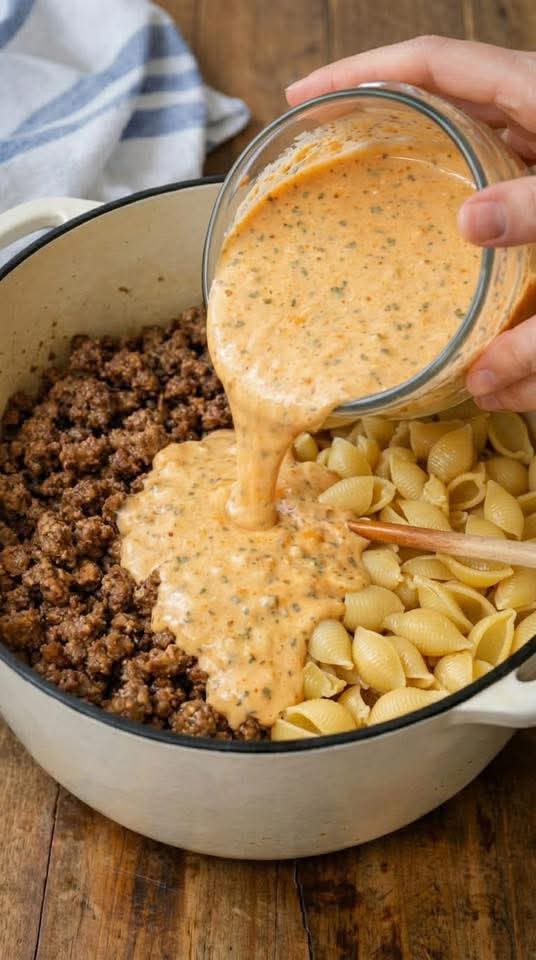
When tender pasta, perfectly seasoned ground beef, and a rich creamy cheese sauce come together in one pot, the result is the kind of comforting homemade dinner that disappears quickly from the table. This One-Pot Creamy Cheesy Beef Pasta combines simple everyday ingredients into a hearty, flavorful meal with a wonderfully creamy texture and plenty of melted cheese in every bite.
The best part is that the entire meal is prepared in a single pot. The beef is browned with onion and garlic, the pasta cooks directly in a flavorful combination of beef broth, milk, and cream, and everything is finished with cream cheese, cheddar, and mozzarella. As the pasta cooks, the starch released into the sauce helps create a naturally thick and creamy consistency without requiring a separate sauce or an additional pot.
This recipe is especially convenient for busy evenings when you want something homemade without spending a long time in the kitchen. It is filling enough for a family dinner, simple enough for a weeknight meal, and flexible enough to adjust according to the ingredients you already have available.
Why You’ll Love This Recipe
There are plenty of reasons this creamy beef pasta can become a regular part of your dinner rotation. It brings together familiar ingredients, requires minimal preparation, and delivers a rich and satisfying result without complicated cooking techniques.
- Everything cooks in one pot: The beef, pasta, and creamy sauce are prepared together, which means fewer dishes and less cleanup.
- Rich and creamy: Heavy cream, milk, cream cheese, cheddar, and mozzarella create a smooth and luxurious sauce.
- Full of flavor: Ground beef, onion, garlic, paprika, and Italian seasoning create a savory base for the pasta.
- Family-friendly: The mild seasoning and creamy cheese sauce make this a comforting option for both adults and children.
- Quick enough for weeknights: The complete meal can be ready in roughly 35 minutes.
- Easy to customize: You can add vegetables, change the cheese, adjust the seasoning, or use a different type of pasta.
- Great for leftovers: The pasta reheats easily with a small amount of milk or cream.
- No complicated sauce: The creamy sauce develops directly in the same pot while the pasta cooks.
What Makes One-Pot Pasta So Convenient?
Traditional pasta dishes often require several separate steps, such as boiling pasta in one pot, preparing meat in another pan, and making the sauce separately. This recipe simplifies that process by allowing the pasta to cook directly in the flavorful liquid with the browned beef.
As the pasta simmers, it absorbs some of the beef broth, milk, cream, and seasonings. At the same time, the starch from the pasta naturally thickens the cooking liquid. Once the pasta is tender, cream cheese and shredded cheeses are added to create the final creamy consistency.
This method also allows the flavors to develop together. Instead of having separate components that are combined at the end, the beef, aromatics, pasta, and cooking liquid all contribute to the final flavor of the dish.
Ingredients
For the Beef and Aromatics
- 1 lb (450 g) lean ground beef
- 2 tbsp butter
- 1 small onion, finely diced
- 3 garlic cloves, minced
For the Pasta
- 2 cups uncooked pasta, such as shells, rotini, penne, or elbow macaroni
- 2 cups beef broth
- 1 cup whole milk
- 1 cup heavy cream
For the Cheese Sauce
- 2 cups shredded cheddar cheese
- ½ cup shredded mozzarella cheese
- 2 tbsp cream cheese
Seasonings
- 1 tsp paprika
- 1 tsp Italian seasoning
- ½ tsp black pepper
- Salt to taste
- Fresh parsley for garnish
Ingredient Notes
Ground beef: Lean ground beef works particularly well because it provides plenty of beefy flavor without leaving the finished dish excessively greasy. If using ground beef with a higher fat content, you can drain some of the excess fat after browning.
Pasta: Short pasta shapes are ideal because they are easy to stir and cook evenly in a skillet or Dutch oven. Shells, rotini, penne, and elbow macaroni are all suitable options.
Beef broth: Beef broth provides the main savory foundation for the pasta. If your broth is particularly salty, reduce the amount of additional salt and adjust it near the end of cooking.
Milk: Whole milk adds creaminess while keeping the sauce from becoming overly heavy. Lower-fat milk can also be used, although the finished sauce may be slightly less rich.
Heavy cream: Heavy cream gives the dish its luxurious texture and helps create a smooth sauce when combined with the melted cheese.
Cheddar cheese: Cheddar brings a strong cheesy flavor and melts into the sauce. Medium cheddar offers a balanced flavor, while sharp cheddar can be used if you prefer a more pronounced cheese taste.
Mozzarella: Mozzarella adds extra creaminess and a stretchy melted-cheese texture.
Cream cheese: A small amount of cream cheese helps make the sauce thicker, smoother, and richer.
Garlic and onion: These aromatics create the savory base of the dish and add depth to the beef before the pasta and dairy ingredients are introduced.
Kitchen Equipment
- Large deep skillet or Dutch oven
- Wooden spoon or heat-resistant spatula
- Measuring cups
- Measuring spoons
- Cheese grater
- Knife
- Cutting board
- Ladle or large serving spoon
Before You Start
Before beginning, prepare all of the ingredients so they are ready to add when needed. Dice the onion, mince the garlic, grate the cheese, and measure the broth, milk, and cream. Having everything prepared makes the cooking process easier because the recipe moves fairly quickly once the beef begins cooking.
If possible, shred the cheddar and mozzarella yourself. Freshly grated cheese generally melts more smoothly because it does not contain as many anti-caking ingredients as some pre-shredded cheeses.
Step-by-Step Instructions
1. Prepare the Ingredients
Start by finely dicing the onion and mincing the garlic. Shred the cheddar and mozzarella cheeses and set them aside. Measure the beef broth, whole milk, and heavy cream so everything is ready when it is time to add the cooking liquid.
Keeping the ingredients organized is especially helpful for a one-pot recipe because the cooking process moves from one stage to the next without much downtime.
2. Heat the Pot
Place a large deep skillet or Dutch oven over medium heat. Add the butter and allow it to melt completely. Once the butter is melted and lightly heated, add the diced onion.
Cook the onion for approximately 3 to 4 minutes, stirring occasionally, until it becomes soft and translucent. The goal is to soften the onion without heavily browning it.
3. Add the Garlic
Add the minced garlic to the softened onion and stir well. Cook for approximately 30 seconds, just until the garlic becomes fragrant.
Garlic cooks quickly, so avoid leaving it in the pot for too long before adding the beef. Overcooked garlic can develop a bitter flavor.
4. Brown the Ground Beef
Add the ground beef to the pot. Use a wooden spoon or spatula to break the meat into small pieces as it cooks.
Continue cooking over medium heat until the beef is completely browned and no longer pink. Stir regularly so the beef cooks evenly and combines with the onion and garlic.
If there is a significant amount of excess grease in the pot, carefully drain some of it before continuing. Leaving a small amount of flavorful fat can help carry the seasonings, but excessive grease can make the final sauce feel heavy.
5. Season the Beef
Add the paprika, Italian seasoning, black pepper, and a small amount of salt. Stir thoroughly so the seasonings coat the beef and aromatics.
Allow the seasoned beef to cook for another 30 to 60 seconds. This brief step helps the spices become fragrant before the liquid is added.
6. Add the Cooking Liquids
Pour the beef broth into the pot, followed by the whole milk and heavy cream. Stir gently, scraping the bottom of the pot with a wooden spoon to loosen any flavorful browned bits left from cooking the beef.
These browned bits contribute additional savory flavor to the sauce, while the combination of broth, milk, and cream creates the liquid in which the pasta will cook.
7. Add the Uncooked Pasta
Add the uncooked pasta directly to the pot. Stir carefully so the pasta is distributed evenly throughout the liquid and does not remain stuck together.
Bring the mixture to a gentle simmer. Avoid using excessively high heat because dairy-based liquids can scorch or boil too aggressively.
8. Simmer the Pasta
Once the mixture reaches a gentle simmer, reduce the heat as needed to maintain steady cooking. Cook the pasta for approximately 10 to 12 minutes, stirring every few minutes.
The exact cooking time can vary depending on the pasta shape and brand. Check the package instructions as a general guide, but begin tasting the pasta toward the end of the suggested cooking time.
The pasta should become tender while still retaining enough structure to hold its shape. At the same time, the cooking liquid should begin to thicken as the pasta releases starch.
9. Monitor the Consistency
While the pasta cooks, pay attention to the amount of liquid in the pot. Stirring regularly helps prevent the pasta from sticking to the bottom and encourages even cooking.
If the mixture becomes too thick before the pasta is fully tender, add a small splash of broth or milk and continue cooking. If the pasta is tender but the sauce seems too loose, allow it to simmer gently for another minute or two before adding the cheese.
10. Lower the Heat
Once the pasta is tender, reduce the heat to low. This is an important step before adding the cheese because extremely high heat can cause dairy-based sauces to become oily or grainy.
11. Add the Cream Cheese
Add the cream cheese and stir gently until it is completely incorporated into the hot sauce.
The cream cheese should melt into the cooking liquid and help create a smooth, creamy foundation for the shredded cheeses.
12. Add the Cheddar Cheese
Gradually add the shredded cheddar cheese, stirring continuously. Add it in several small handfuls rather than all at once.
Allow each addition to melt into the sauce before adding more. This gradual approach helps the cheese incorporate evenly and creates a smoother final texture.
13. Add the Mozzarella
Once the cheddar has melted, add the mozzarella. Continue stirring gently until the mozzarella is fully incorporated and the sauce becomes creamy and cohesive.
At this point, the beef and pasta should be surrounded by a thick, glossy cheese sauce.
14. Taste and Adjust the Seasoning
Taste the finished pasta carefully and adjust the seasoning if necessary. Depending on the saltiness of the beef broth and cheese, you may or may not need additional salt.
You can also add a little extra black pepper, paprika, Italian seasoning, or crushed red pepper flakes depending on your preferred flavor.
15. Let the Pasta Rest
Remove the pot from the heat and allow the pasta to rest for approximately 3 to 5 minutes.
This short resting period gives the sauce time to thicken naturally. The pasta will also continue absorbing some of the creamy sauce, making the finished dish even richer and more cohesive.
16. Garnish and Serve
Sprinkle the finished pasta with freshly chopped parsley just before serving. Serve it hot while the cheese sauce is creamy and smooth.
How to Get the Creamiest Sauce
The consistency of a creamy pasta sauce depends on several factors, including the amount of liquid, the type of pasta, the cooking temperature, and the way the cheese is added.
- Use freshly grated cheese whenever possible.
- Add the cheese after reducing the heat.
- Stir continuously while adding the cheese.
- Do not boil the sauce aggressively after adding dairy ingredients.
- Allow the pasta to rest for several minutes before serving.
- If the sauce becomes too thick, loosen it with a small splash of milk or broth.
- If the sauce is too thin, allow it to rest or simmer gently for a short time before serving.
Tips for the Best Flavor
- Brown the beef properly: Allow the beef to develop some color instead of simply steaming it.
- Cook the onion first: Softened onion adds sweetness and depth to the savory beef.
- Do not burn the garlic: Garlic only needs a short time to become fragrant.
- Season in layers: Seasoning the beef before adding the liquid helps build flavor throughout the dish.
- Use good-quality cheese: The cheese contributes significantly to the final flavor and texture.
- Grate cheese yourself: Freshly grated cheese usually melts more smoothly.
- Keep the heat moderate: Gentle cooking helps prevent the milk and cream from scorching.
- Stir regularly: This helps prevent pasta from sticking and promotes even cooking.
- Let it rest: A few minutes off the heat allows the sauce to reach its final consistency.
Easy Variations
One of the best things about this recipe is how easy it is to customize. Once you understand the basic method, you can adjust the ingredients to suit your family’s preferences or use what you already have in the refrigerator.
Mushroom Beef Pasta
Add sliced mushrooms after the onion has softened. Cook them until they release their moisture and become tender before adding the garlic and ground beef. Mushrooms add an earthy flavor that works especially well with beef and cheese.
Spinach and Beef Pasta
Stir a few handfuls of fresh spinach into the finished pasta. The residual heat will soften the spinach quickly. This is an easy way to add a green vegetable without changing the basic cooking method.
Spicy Cheesy Beef Pasta
If you enjoy a little heat, add crushed red pepper flakes, cayenne pepper, or a small amount of hot sauce. Start with a modest amount and adjust after tasting.
Extra Garlic Version
For a stronger garlic flavor, increase the garlic slightly or add a small amount of roasted garlic toward the end of cooking.
Vegetable Beef Pasta
Finely diced bell peppers, zucchini, mushrooms, peas, or spinach can all be incorporated into the dish. Choose vegetables that cook relatively quickly so the pasta does not become overcooked while waiting for the vegetables to soften.
Different Cheese Combination
Cheddar and mozzarella are a classic combination, but you can experiment with other good-melting cheeses. Monterey Jack, Colby, mild provolone, or a small amount of Parmesan can be incorporated depending on the flavor you want.
Choosing the Right Pasta
Short pasta shapes work particularly well for this recipe because they are easy to stir and can hold onto the creamy sauce.
- Shells: Excellent for catching small pieces of beef and creamy sauce.
- Rotini: The spiral shape holds onto the cheese sauce nicely.
- Penne: A sturdy option that works well with the beef and creamy sauce.
- Elbow macaroni: A classic choice for cheesy pasta dishes.
- Small rigatoni: Works well if you prefer a slightly larger pasta shape.
If you change the pasta shape, keep in mind that cooking times and liquid absorption can vary. Check the pasta regularly toward the end of cooking rather than relying only on a fixed time.
Serving Suggestions
This creamy beef pasta is substantial enough to serve as a complete main course, but it also pairs well with simple side dishes if you want to create a larger family meal.
- Warm garlic bread
- Crusty bread
- Simple green salad
- Steamed broccoli
- Roasted vegetables
- Green beans
- Roasted carrots
- Fresh tomato salad
For an especially simple dinner, serve the pasta with a fresh green salad and warm bread. The freshness of the salad provides a pleasant contrast to the rich and creamy pasta.
How to Make It Ahead
This recipe is best served immediately because the cheese sauce is at its creamiest when freshly prepared. However, you can prepare the ingredients in advance to make dinner easier.
Dice the onion, mince the garlic, shred the cheese, and measure the seasonings earlier in the day. Store the prepared ingredients separately in the refrigerator until you are ready to cook.
This small amount of preparation can significantly reduce the amount of work required during a busy evening.
Storage
Allow leftovers to cool appropriately before transferring them to an airtight container. Store the cooked pasta in the refrigerator and enjoy within approximately 3 days.
Because pasta continues absorbing sauce as it sits, leftovers may become thicker than the freshly prepared dish. This is completely normal and can be corrected during reheating.
How to Reheat Leftovers
For best results, reheat the pasta gently rather than using very high heat.
Stovetop Method
Place the desired portion in a saucepan or skillet over low to medium-low heat. Add a small splash of milk, cream, or beef broth and stir gently while heating. Continue until the pasta is warmed through and the sauce becomes creamy again.
Microwave Method
Place a serving in a microwave-safe bowl. Add a small splash of milk or broth and cover loosely. Heat in short intervals, stirring between each interval until warmed through.
Avoid overheating the pasta because excessive heat can cause the cheese sauce to separate and become less creamy.
Common Mistakes to Avoid
Using Too Much Heat
High heat can cause the dairy-based cooking liquid to scorch or the cheese sauce to separate. Keep the cooking temperature moderate and reduce the heat before incorporating the cheese.
Adding All the Cheese at Once
Adding a large amount of cheese at one time can make it harder for the cheese to melt evenly. Gradually adding the cheese while stirring helps create a smoother sauce.
Not Stirring the Pasta
Because the pasta cooks directly in the sauce, it is important to stir regularly. This prevents pieces from sticking together or settling against the bottom of the pot.
Overcooking the Pasta
Check the pasta toward the end of cooking. It should be tender but not mushy. Remember that the pasta will continue cooking slightly from the residual heat after the pot is removed from the stove.
Adding Too Much Salt Too Early
Beef broth and cheese can both contain significant amounts of salt. It is better to season gradually and taste the finished dish before adding additional salt.
How to Adjust the Sauce
If the sauce is too thick, stir in a small amount of warm milk or broth until the desired consistency is reached.
If the sauce is too thin, allow the pasta to sit for several minutes. The sauce often thickens naturally as it cools slightly and the pasta continues absorbing liquid.
If additional thickening is needed, you can return the pot to low heat for a short time while stirring gently. Avoid prolonged high-temperature cooking after the cheese has been incorporated.
Flavor Ideas
The basic recipe has a savory and creamy flavor profile, but it can easily be adjusted depending on your preferences.
- Add smoked paprika for a deeper smoky flavor.
- Add red pepper flakes for gentle heat.
- Add fresh parsley for a bright finishing note.
- Add a small amount of Parmesan for extra savory flavor.
- Add sautéed mushrooms for an earthy element.
- Add spinach for a simple vegetable addition.
- Add diced bell peppers for sweetness and color.
- Add extra black pepper for a stronger peppery flavor.
Why This Recipe Works
The recipe works because each component contributes something important to the finished dish. The ground beef provides a savory and hearty foundation, while onion and garlic add aromatic depth. Beef broth reinforces the meat flavor, and milk and cream create a rich cooking liquid for the pasta.
As the pasta cooks, it releases starch into the liquid. This starch helps naturally thicken the sauce. Cream cheese adds body and smoothness, while cheddar contributes strong cheese flavor and mozzarella adds additional meltability.
The result is a cohesive dish where the pasta, beef, and cheese sauce are combined rather than served as separate components.
Texture Guide
The ideal finished texture should be creamy and thick enough to coat the pasta without becoming dry. The sauce should cling to the pasta and remain smooth when stirred.
If you prefer a looser sauce, add a small amount of milk or broth immediately before serving. If you prefer a thicker consistency, allow the pasta to rest for several minutes after cooking.
Family Dinner Idea
This pasta can be served directly from the cooking pot for a relaxed family-style dinner. Place the pot on a heat-safe surface, garnish with parsley, and let everyone serve themselves.
For a larger dinner, add a simple vegetable side and some warm bread. Because the pasta already contains beef and cheese, the meal does not require complicated side dishes.
Frequently Asked Questions
Can I use a different type of ground meat?
Yes. Ground turkey or ground chicken can be used instead of beef if preferred. Keep in mind that changing the meat will also change the overall flavor of the dish.
Can I use pre-shredded cheese?
Yes, but freshly grated cheese is generally preferable for a smooth sauce. Pre-shredded cheese may contain ingredients that can affect how smoothly it melts.
Can I make this without heavy cream?
You can adjust the dairy combination if necessary, although the finished sauce may be lighter and less rich. If replacing heavy cream, monitor the consistency carefully and adjust with additional cheese or a small amount of cream cheese if needed.
Can I add vegetables?
Absolutely. Mushrooms, spinach, peas, bell peppers, zucchini, and broccoli can all work well. Choose vegetables according to how quickly they cook and add them at the appropriate stage.
Can I make the pasta spicy?
Yes. Crushed red pepper flakes, cayenne pepper, or hot sauce can be added according to your preferred level of heat.
Why did my sauce become too thick?
Pasta continues absorbing liquid as it sits, so the sauce naturally becomes thicker over time. Add a small splash of milk or broth and stir gently to loosen it.
Why is my cheese sauce not smooth?
Very high heat can cause cheese to separate. To encourage a smooth sauce, reduce the heat before adding the cheese, add the cheese gradually, and stir continuously.
Can I freeze this pasta?
Creamy cheese-based pasta can change texture after freezing and thawing. For the best texture, this recipe is generally better enjoyed fresh or refrigerated and reheated within a few days.
Recipe Tips at a Glance
- Prepare all ingredients before starting.
- Brown the beef thoroughly for better flavor.
- Cook the onion until soft before adding the beef.
- Add garlic shortly before the liquid ingredients.
- Use a large deep pot to give the pasta enough room to cook.
- Stir the pasta regularly while it simmers.
- Keep the heat gentle once dairy ingredients are added.
- Reduce the heat before adding cheese.
- Add cheese gradually for a smoother sauce.
- Taste before adding extra salt.
- Let the finished pasta rest for several minutes.
- Add a small splash of milk or broth when reheating leftovers.
Serving the Pasta
For the best presentation, serve the pasta immediately after the short resting period. Spoon it into bowls and finish each serving with a little chopped fresh parsley.
If desired, add a small amount of freshly grated cheese on top while the pasta is still hot. The residual heat will soften the cheese and add another layer of flavor.
Recipe Notes
Medium cheddar provides a balanced combination of flavor and meltability, while mozzarella contributes a softer texture and additional stretch. Cream cheese helps bind the dairy ingredients together and gives the sauce a smooth, creamy finish.
The exact consistency can vary depending on the pasta shape, the amount of starch released during cooking, the heat level, and the specific brands of dairy products used. For that reason, use the listed quantities as a starting point and make small adjustments when necessary.
Short pasta shapes are recommended because they cook conveniently in a single pot and distribute the beef and sauce throughout each serving. If using a different pasta shape, monitor the cooking process closely because cooking times may vary.
Meal Preparation Timeline
The first few minutes are used to prepare the onion, garlic, and beef. Once the beef is browned and seasoned, the broth, milk, cream, and pasta are added. The pasta then cooks directly in the same pot while the liquid gradually thickens.
The final stage is quick. Once the pasta is tender, the heat is reduced and the cream cheese, cheddar, and mozzarella are incorporated. After a short resting period, the dish is ready to serve.
Perfect for Busy Weeknights
One of the biggest advantages of this recipe is that it does not require complicated preparation. There is no need to cook the pasta separately, prepare a separate cheese sauce, or use several different pans.
With a little preparation before cooking, the entire process can move smoothly from the skillet to the dinner table. This makes it a practical option for evenings when you want a warm and satisfying homemade meal without an extensive cleanup afterward.
Final Thoughts
One-Pot Creamy Cheesy Beef Pasta is a comforting combination of tender pasta, seasoned ground beef, creamy dairy, and plenty of melted cheese. The one-pot cooking method keeps the process simple while allowing the ingredients to develop their flavors together.
Whether you prepare the classic version or customize it with mushrooms, spinach, vegetables, additional spices, or a different cheese combination, the basic method remains straightforward. Keep the pasta simmering gently, stir regularly, add the cheese over low heat, and allow the finished dish to rest before serving.
The result is a warm, hearty, creamy pasta dinner that is easy to prepare, easy to customize, and especially convenient when you want a satisfying meal without a complicated cleanup.
Recipe Information
Prep Time: 10 minutes
Cook Time: 25 minutes
Total Time: 35 minutes
Servings: 6
Course: Main Course
Cuisine: American-inspired comfort food
Cooking Method: One-pot cooking
Ingredient Summary
- Ground beef for a hearty savory base
- Onion and garlic for aromatic flavor
- Short pasta for the main component
- Beef broth for savory depth
- Whole milk for creaminess
- Heavy cream for richness
- Cheddar for strong cheesy flavor
- Mozzarella for additional meltability
- Cream cheese for a smooth and creamy texture
- Paprika and Italian seasoning for additional flavor
- Fresh parsley for garnish
Storage Reminder
Store leftover pasta in a sealed container in the refrigerator and consume within approximately 3 days. When reheating, add a small amount of milk or broth to help restore the creamy consistency.
Always use your best judgment when storing and reheating prepared food, and keep leftovers refrigerated promptly and appropriately.
Disclaimer: This recipe is provided for general informational and educational purposes. Results may vary depending on ingredients, cooking equipment, and preparation methods.