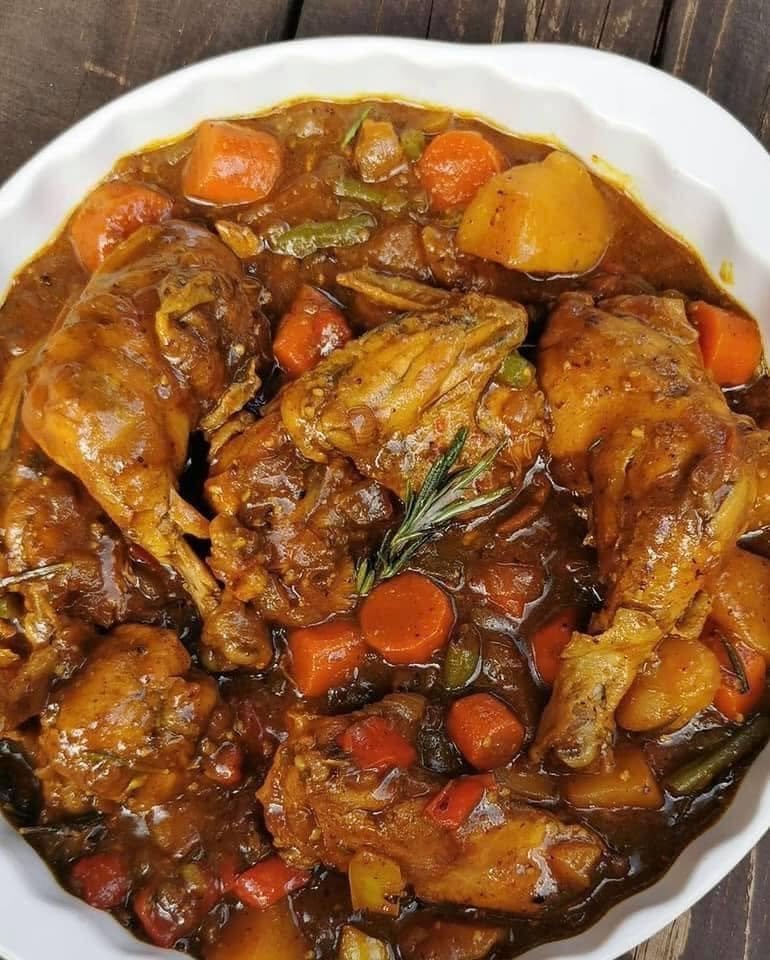
This hearty chicken and vegetable stew is the kind of comforting homemade meal that fills the kitchen with an irresistible aroma while it slowly simmers. Tender pieces of chicken are combined with potatoes, carrots, peppers, onions, herbs, and a rich savory sauce to create a complete meal that is satisfying, flavorful, and easy to prepare.
The finished dish has a deep golden-brown color, tender vegetables, juicy pieces of chicken, and a thick sauce that coats every ingredient. The combination of browned chicken and slowly cooked vegetables gives the stew a rich homemade character, while the potatoes help make the sauce hearty and substantial.
This recipe is inspired by the style of dish shown in the accompanying photo. It is designed as a flexible home-style recipe, so the vegetables and seasonings can be adjusted according to what you have available in your kitchen.
Why You Will Love This Chicken and Vegetable Stew
There is something especially satisfying about a meal that can be prepared in one large pot and allowed to slowly develop its flavor. This chicken stew is simple enough for an ordinary family dinner, but it also has the rich appearance and comforting texture that make it suitable for a weekend meal or a gathering around the table.
One of the best parts of this recipe is the combination of textures. The chicken becomes tender as it cooks in the sauce, the potatoes absorb the savory flavors around them, and the carrots and peppers add natural sweetness and color. The thick sauce brings everything together without requiring a complicated cooking technique.
Another advantage is its flexibility. You can use chicken thighs, drumsticks, or a mixture of bone-in chicken pieces. You can also adjust the vegetables depending on what you already have available.
Ingredients
For the Chicken
- 2 1/2 to 3 pounds chicken thighs or mixed chicken pieces
- 1 teaspoon salt
- 1/2 teaspoon black pepper
- 1 teaspoon paprika
- 1/2 teaspoon garlic powder
- 2 tablespoons olive oil or another cooking oil
For the Vegetables
- 1 large onion, chopped
- 3 to 4 medium carrots, peeled and cut into thick slices
- 3 medium potatoes, peeled and cut into large chunks
- 1 red bell pepper, cut into medium pieces
- 1 green bell pepper, cut into medium pieces
- 3 cloves garlic, finely chopped
- 1 to 2 small tomatoes, chopped, or 1 cup crushed tomatoes
For the Stew Sauce
- 2 tablespoons tomato paste
- 3 cups chicken broth
- 1 teaspoon paprika
- 1/2 teaspoon dried thyme
- 1/2 teaspoon dried oregano
- 1 small sprig fresh rosemary
- 1 bay leaf
- 1/2 teaspoon black pepper
- Salt to taste
- 1 tablespoon Worcestershire sauce, optional
- 1 tablespoon fresh parsley, chopped
Optional Ingredients
The basic recipe already creates a rich and flavorful stew, but several additional ingredients can be used if you want to customize the dish.
- Celery, cut into small pieces
- Green beans
- Sweet paprika for a slightly sweeter flavor
- A pinch of chili flakes for gentle heat
- Fresh thyme instead of dried thyme
- Additional fresh rosemary for serving
- A small amount of butter stirred into the finished sauce
How to Make Chicken and Vegetable Stew
Step 1: Prepare the Chicken
Start by patting the chicken pieces dry with paper towels. Removing excess moisture helps the chicken brown more effectively when it reaches the hot pan.
Season the chicken on all sides with salt, black pepper, paprika, and garlic powder. Make sure the seasoning is distributed evenly so that every piece develops a flavorful surface during cooking.
Allow the seasoned chicken to rest for a few minutes while you prepare the vegetables. This short resting period also gives you enough time to chop the onion, carrots, potatoes, and peppers.
Step 2: Brown the Chicken
Heat the olive oil in a large heavy-bottomed pot or Dutch oven over medium-high heat. When the oil is hot, carefully place the chicken pieces into the pot.
Brown the chicken in batches if necessary. Avoid overcrowding the pot because too many pieces at once can cause the chicken to steam instead of developing a deep golden-brown exterior.
Cook the chicken for several minutes on each side until it develops a rich golden color. The chicken does not need to be completely cooked through at this stage because it will continue cooking later in the stew.
Once browned, transfer the chicken to a clean plate and set it aside temporarily.
Step 3: Cook the Onion and Garlic
Using the same pot, add the chopped onion to the remaining cooking juices. Stir the onion around the bottom of the pot, scraping up some of the flavorful browned bits left behind by the chicken.
Cook the onion until it becomes soft and lightly golden. Add the chopped garlic and cook for approximately 30 to 60 seconds, stirring constantly so that the garlic becomes fragrant without burning.
This stage is important because the onions and garlic form the aromatic foundation of the stew.
Step 4: Add the Tomato Paste
Add the tomato paste to the pot and stir it into the onions and garlic. Cook the tomato paste for approximately one to two minutes.
Allowing the tomato paste to cook briefly deepens its flavor and gives the eventual sauce a richer color. Stir continuously so it does not stick or burn to the bottom of the pot.
Step 5: Add the Carrots and Peppers
Add the sliced carrots, red bell pepper, and green bell pepper. Stir everything together so the vegetables become coated with the tomato mixture and the flavorful juices already present in the pot.
Cook the vegetables for several minutes. They do not need to become completely tender at this point because they will continue cooking as the stew simmers.
Step 6: Add the Potatoes
Add the potato chunks to the pot and stir gently. Cutting the potatoes into relatively large pieces helps them maintain their shape during the longer cooking process.
If the potato pieces are too small, they may become very soft and break apart before the chicken and other vegetables are finished cooking.
Step 7: Build the Sauce
Pour the chicken broth into the pot and stir carefully to combine it with the vegetables and tomato mixture.
Add the paprika, thyme, oregano, black pepper, bay leaf, and rosemary. If you are using Worcestershire sauce, add it at this stage as well.
Stir everything together and bring the liquid to a gentle simmer.
Step 8: Return the Chicken to the Pot
Place the browned chicken pieces back into the pot. Arrange them among the vegetables so that they are partially surrounded by the sauce.
The chicken should sit comfortably in the cooking liquid without being completely submerged. As the stew cooks, the chicken will release additional juices and flavor into the sauce.
Step 9: Simmer Slowly
Reduce the heat to low and cover the pot with a lid. Allow the stew to simmer gently until the chicken is tender and the vegetables are cooked through.
A gentle simmer is preferable to vigorous boiling. Slow cooking allows the flavors to develop while helping the chicken remain tender and giving the vegetables enough time to absorb the savory sauce.
Check the pot occasionally and give the stew a gentle stir, especially around the bottom. If the sauce becomes thicker than you prefer before the chicken is finished, add a small amount of additional chicken broth or water.
Step 10: Check the Consistency
When the chicken and vegetables are tender, remove the lid and examine the sauce. If it is too thin, allow the stew to simmer uncovered for several additional minutes so some of the excess liquid can evaporate.
If the sauce is already thick and glossy, avoid prolonged boiling because you do not want the vegetables to become overly soft.
The ideal consistency is rich and spoonable, with enough sauce to coat the chicken and vegetables without looking watery.
Step 11: Final Seasoning
Taste the sauce carefully and adjust the salt and black pepper if necessary.
Remove the bay leaf and rosemary sprig before serving. Sprinkle fresh chopped parsley over the top for a fresh finishing touch.
A small amount of fresh rosemary can also be used as a garnish, especially if you want the finished dish to have the rustic appearance shown in the photo.
How to Get Deep Flavor in the Sauce
The most important step for developing a rich sauce is properly browning the chicken before adding the liquid. The browned surface of the chicken contributes a deeper flavor to the entire dish.
Another important technique is cooking the tomato paste briefly before adding the broth. This removes some of its raw flavor and gives the sauce a deeper, more developed taste.
Finally, avoid rushing the simmering stage. A stew benefits from gentle cooking because the ingredients have time to exchange their flavors as they cook together.
Choosing the Best Chicken Pieces
Chicken thighs are particularly well suited to this type of stew because they remain tender during longer cooking. Bone-in thighs can provide additional flavor, while boneless thighs are convenient and easier to serve.
Chicken drumsticks are another excellent option. They are naturally flavorful and work especially well in slow-cooked dishes.
You can also use a combination of thighs and drumsticks if you want a mixture of different pieces throughout the pot.
How to Prepare the Vegetables
Cutting the vegetables into similar-sized pieces helps them cook more evenly. However, the potatoes can be slightly larger because they tend to soften faster than carrots during prolonged simmering.
Carrots should be cut into thick slices or chunks rather than very thin pieces. This allows them to remain recognizable in the finished stew while becoming tender enough to eat easily.
Bell peppers can be cut into medium-sized pieces. They soften during cooking and add both color and a naturally sweet flavor to the sauce.
How to Make the Stew Thicker
If you prefer a thicker sauce, the simplest method is to simmer the stew uncovered near the end of cooking. As some of the liquid evaporates, the sauce will naturally become more concentrated.
You can also allow some of the cooked potatoes to break down slightly. Their natural starch can help give the sauce a thicker, more substantial texture without requiring a separate thickening mixture.
If you want a very smooth and thick sauce, you can remove a few pieces of cooked potato, mash them separately, and stir them back into the pot.
How to Make the Sauce More Rustic
For a rustic home-style result, do not worry about making every vegetable piece perfectly uniform. Larger chunks of carrots, potatoes, peppers, and chicken give the stew a traditional homemade appearance.
The combination of different shapes and sizes also makes the finished dish visually similar to the hearty one-pot meals often served directly from the cooking pot.
Serving Suggestions
This chicken and vegetable stew can be served as a complete meal because it already contains chicken, potatoes, carrots, peppers, and a rich sauce.
For an even more substantial dinner, serve it with one of the following:
- Warm crusty bread
- Fresh homemade bread
- Steamed rice
- Mashed potatoes
- Buttered noodles
- A simple green salad
- Roasted vegetables
Crusty bread is particularly useful because it can be served alongside the stew to soak up the thick, savory sauce.
Can This Recipe Be Made Ahead?
Yes. This type of stew is well suited to preparing ahead of time. After cooking, allow the dish to cool appropriately before transferring it to a suitable covered container and refrigerating it.
When reheating, warm it gently on the stovetop or in the microwave until it is heated thoroughly. If the sauce becomes too thick after refrigeration, add a small amount of broth or water while reheating.
Storage
Store leftover stew in a covered food-safe container in the refrigerator. For longer storage, the stew can also be frozen in suitable freezer-safe containers.
If freezing, allow enough space in the container for expansion and label the container with the date. Thaw refrigerated portions safely before reheating.
Because the potatoes can change texture after freezing and reheating, the finished stew may have a slightly different consistency than when freshly prepared. The flavor, however, can remain very satisfying.
Recipe Tips for the Best Results
- Brown the chicken first: This creates a deeper savory flavor in the finished stew.
- Do not overcrowd the pan: Brown the chicken in batches if necessary.
- Cook the tomato paste: A short cooking period helps develop its flavor.
- Use large vegetable pieces: This helps the potatoes and carrots hold their shape.
- Keep the simmer gentle: Slow cooking helps the chicken become tender.
- Adjust the liquid: Add broth if the stew becomes too dry during cooking.
- Reduce uncovered at the end: This is an easy way to concentrate the sauce.
- Taste before serving: Adjust salt and pepper only after the ingredients have finished cooking.
- Use fresh herbs at the end: Parsley and a small amount of rosemary add freshness to the finished dish.
Easy Variations
Chicken and Mushroom Stew
Add sliced mushrooms together with the onions or after the chicken has been browned. Mushrooms absorb the savory sauce and add another layer of texture to the dish.
Spicy Chicken Stew
For a little heat, add a small amount of crushed red pepper flakes or finely chopped fresh chili pepper. Start with a small quantity and increase it gradually according to your preference.
Chicken Stew with Green Beans
Fresh or frozen green beans can be added during the later portion of cooking. They add color and a slightly crisp texture while complementing the carrots and potatoes.
Extra-Herby Chicken Stew
If you enjoy a stronger herb flavor, increase the amount of thyme and add additional fresh parsley just before serving. Fresh rosemary can also be used carefully because its flavor can become quite pronounced during long cooking.
Frequently Asked Questions
Can I use boneless chicken?
Yes. Boneless chicken thighs work particularly well. Because they generally cook faster than larger bone-in pieces, begin checking them earlier so they do not become overcooked.
Can I use chicken breast?
Chicken breast can be used, although it is leaner than chicken thighs. If using breast meat, avoid excessive cooking time and keep the stew at a gentle simmer to help maintain a tender texture.
Can I add more vegetables?
Absolutely. This is a flexible stew. Celery, green beans, mushrooms, peas, or additional peppers can be incorporated depending on your preferences and what is available in your kitchen.
Can I make it without tomato paste?
Yes. The tomato paste contributes color, body, and a deeper savory flavor, but the stew can still be prepared without it. The final sauce will simply have a somewhat different flavor and appearance.
Can I make the stew more saucy?
Yes. Add additional chicken broth during cooking. Remember that the amount of liquid will change as the stew simmers, so add it gradually rather than all at once.
Why should the chicken be browned first?
Browning creates a flavorful exterior and leaves savory browned bits in the cooking pot. These flavors become part of the sauce when the broth and vegetables are added later.
How do I know when the chicken is done?
The safest approach is to check the chicken using a food thermometer and follow recommended food-safety temperatures for poultry. The meat should also be tender and fully cooked throughout.
Can I use different potatoes?
Yes. Most common cooking potatoes can work in this recipe. Cut them into reasonably large chunks so they have a better chance of maintaining their shape during simmering.
What Makes This a Great One-Pot Dinner?
The biggest advantage of this recipe is its simplicity. Once the chicken has been browned and the vegetables have been added, most of the cooking happens in a single pot.
This means there is less equipment to clean afterward, while the ingredients have plenty of time to develop a cohesive flavor. The chicken, vegetables, herbs, tomato, and broth gradually become part of the same rich sauce.
The result is a comforting dinner with tender chicken, hearty vegetables, and a flavorful sauce that can be served directly from the pot.
Final Thoughts
This hearty chicken and vegetable stew is a classic example of how simple ingredients can come together to create a satisfying homemade meal. Golden-browned chicken, potatoes, carrots, colorful peppers, aromatic herbs, and a rich tomato-based sauce create a dish that looks as comforting as it tastes.
The recipe is also flexible enough to adapt to different kitchens. You can change the vegetables, choose different chicken pieces, adjust the herbs, or make the sauce thicker or more generous depending on how you like your stew.
For the best result, take your time browning the chicken, allow the vegetables to cook gently, and give the sauce enough time to develop its flavor. Finish the dish with fresh parsley or a small rosemary sprig, then serve it warm with bread, rice, or your favorite side dish.
Recipe Summary
- Recipe: Hearty Chicken and Vegetable Stew
- Main ingredients: Chicken, potatoes, carrots, peppers, onion, garlic, and tomato
- Cooking method: Stovetop simmering
- Style: Rustic homemade one-pot meal
- Best served: Warm with crusty bread, rice, or a simple salad
- Difficulty: Easy to moderate
- Suitable for: Family dinners, weekend meals, and make-ahead lunches