Introduction
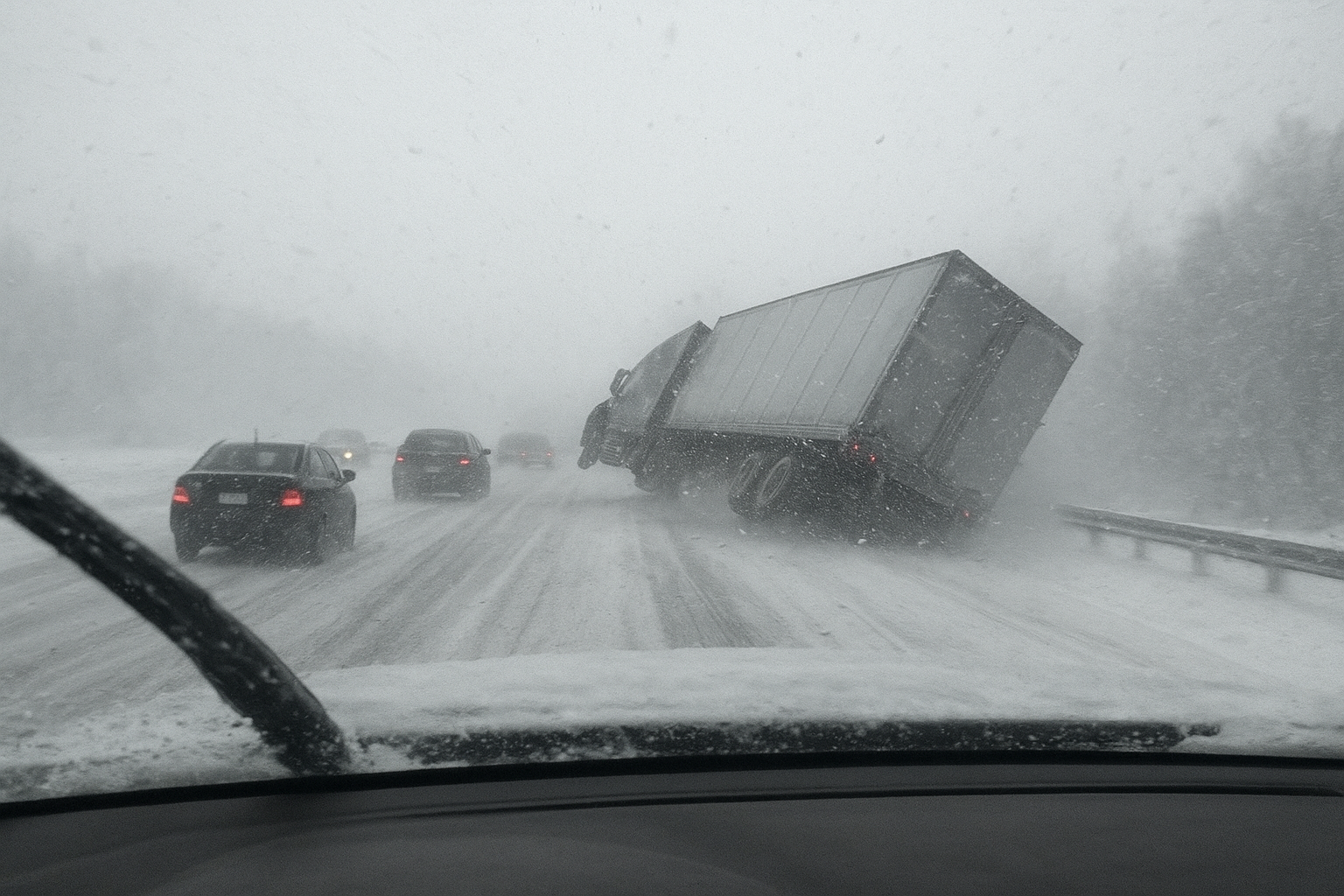
Winter driving in the United States carries a character of its own — a mix of beauty, danger, and unpredictability. Snowfall transforms the world into a white canvas, quieting the environment and softening the scenery, but beneath that calm surface lies a challenge familiar to every driver. Highways, particularly during heavy storms, become slippery corridors where a single mistake can unfold into a chain reaction. The photo captured from a dashcam during a snowy day on an American highway shows an intense moment: a semi-truck losing control on the icy road, sliding sideways, and triggering panic among the vehicles behind it. What starts as a routine drive becomes a near-catastrophic pile-up, reminding us how easily safety can collapse in winter conditions. This extended article explores this event in depth — from environmental factors to driver psychology — offering insight, awareness, and knowledge for anyone who travels snowy roads.
A Calm Winter Drive Before the Storm
The journey begins quietly. Snow drifts gently from a muted sky while cars cruise along in single-file, maintaining measured speeds through the storm. The landscape is peaceful, blanketed in white as far as the eye can see. Drivers rely on headlights cutting through the foggy air, and wipers swipe continuously to keep vision clear. The interior of the car is warm, perhaps filled with quiet conversation, soft music on the radio, or only the hum of the engine. The road feels manageable — not perfect, but safe enough to continue. This is exactly how most winter accidents begin: with a sense of control. The danger isn’t obvious. There is no loud warning, no flashing sign, just the silent presence of black ice beneath the tires. When snow covers asphalt, ice hides like a trap waiting for the right moment.
The Moment Everything Changes
As the dashcam rolls, everything appears normal until suddenly the large truck ahead begins to shift. It doesn’t happen dramatically at first — just a slight fishtail motion, a subtle slide, the kind that experienced drivers know to fear. Within seconds, the movement grows. The trailer swings left, then right, as the driver struggles to regain control. Tires lose grip completely. The truck skids across the lane, turning sideways like a massive wall blocking the roadway. Cars behind react instantly, brake lights glowing through the snowy blur. Some vehicles manage to slow down, while others skid slightly, fighting frictionless pavement. A wave of panic spreads backwards through the highway — hundreds of feet of metal, rubber, and momentum suddenly at risk. The snow amplifies everything: visibility drops, sound dulls, nerves rise, and every driver feels the threat closing in.
How Weather Creates the Perfect Conditions for Disaster
Winter crashes rarely have one cause — they are a combination of elements working together. In this case:
- Snow reduces visibility, making it harder to see hazards early.
- Ice removes friction, turning the road into a slick surface where tires glide rather than grip.
- Cold air thickens fluids in engines and brakes, slowing mechanical response.
- Drivers follow too closely, often underestimating stopping distance.
- Trucks carry enormous weight, which becomes impossible to stop quickly on a frozen surface.
Even with skill, training, and caution, once traction disappears, physics takes over. A truck of this size sliding sideways becomes an unstoppable force. Cars behind have only seconds — sometimes just fractions — to react. On a dry road, this may be enough. On ice, reaction time evaporates.
Inside the Car: The Driver’s Perspective
The dashcam angle places us directly in the driver’s seat. From this view, we experience the moment emotionally, not just visually. You can imagine gripping the steering wheel tighter, feeling that slight pull as your tires meet hidden ice. You might instinctively tap the brake, knowing even that small movement could send you sliding. Passengers might fall silent, holding their breath as the truck sways like a giant pendulum. The sound inside becomes different — no longer routine, but heavy with tension. The heater blows softly, wipers swipe rhythmically, radio murmurs in the background, yet all of it fades behind the one thought every driver knows too well: Please don’t crash. Please stop in time. Moments like this feel longer than they are. Five seconds can stretch into fifteen. A quarter mile feels like a meter. Adrenaline heightens detail — the pattern of snowflakes on the windshield, the blinking brake lights in front, the rumble of tires searching for grip.
The Chain Reaction Effect
Highway accidents rarely involve just one vehicle. When a truck blocks lanes, cars behind scatter instinctively. Some attempt to merge left or right, others brake, and a few may swerve into shoulders. But during snowstorms, these escape paths are limited. Lane markings blur, roadside barriers disappear under snow, and the edges of the road become uncertain. One driver’s small mistake or delayed reaction can trigger a cascading event: the second car brakes late, the third swerves too sharply, the fourth slides sideways, and suddenly dozens of vehicles are involved. Emergency services in such conditions struggle to arrive quickly — road closures, low visibility, and incoming snowfall slow them down. Every minute counts. Every decision matters. Understanding how pile-ups form is essential so drivers can prevent becoming part of one.
Safety Measures That Save Lives in Winter
Proper preparation can turn a dangerous winter drive into a safe one. Experts advise:
- Install winter tires designed to grip slippery surfaces.
- Lower speed significantly, even below the posted limit when snow is heavy.
- Increase following distance — triple normal highway spacing if possible.
- Avoid sudden braking or steering, using gentle, steady movements instead.
- Keep both hands on the wheel, anticipating irregular patches of ice.
- Turn on low-beam headlights, improving visibility without reflection.
- Carry emergency supplies — blankets, flashlight, shovel, and traction aids.
No one expects an accident until it happens. Being prepared is not fear — it is responsibility.
Why Scenes Like This Matter to the Public
Images and stories like this do more than inform — they create awareness. A simple picture of a truck losing control communicates a message stronger than a warning sign on the road. It shows what real winter danger looks like through the eyes of an ordinary driver. Viewers relate to it. They imagine themselves in the car, with family or friends beside them. They understand instinctively that this could be anyone’s story, any day, on any road. Awareness leads to caution; caution leads to fewer accidents. Sharing realistic winter driving scenarios isn’t for fear — it’s for education.
Conclusion
The snowy highway truck crash captured by a dashcam reminds us how fragile safety becomes in winter. One moment of imbalance, one patch of hidden ice, and a routine drive can spiral into chaos. By understanding how these accidents happen and respecting the power of winter weather, drivers can make smarter decisions — slowing down, preparing appropriately, and staying alert. Snow brings beauty to the world, but also responsibility. Every winter journey requires patience, awareness, and humility. Whether you’re driving a small car or a massive truck, nature always has the final word. Stay cautious, stay prepared, and let scenes like this serve as a reminder that safety begins with decisions we make before the danger appears.
Disclaimer:
This article is written for informational and educational purposes. The image referenced in this post is AI-generated and presented for illustration, not a real photo of an actual event. Any resemblance to real incidents is coincidental, and the content is intended solely for awareness regarding winter road safety.