Inside a Chaotic Tunnel Accident in the USA: Full Analysis of a High-Angle Traffic Disaster
Traffic accidents are an unfortunate yet frequent reality on roads around the world. Some, however, stand out due to their complexity, scale, and dramatic consequences. A recent incident inside a dimly lit tunnel in the United States, captured by a high-mounted tunnel camera, provides a vivid example of how quickly routine commutes can escalate into chaotic, life-threatening situations. This incident highlights the importance of safe driving practices, tunnel safety awareness, and emergency preparedness.
A High-Angle Perspective Reveals the Full Chaos
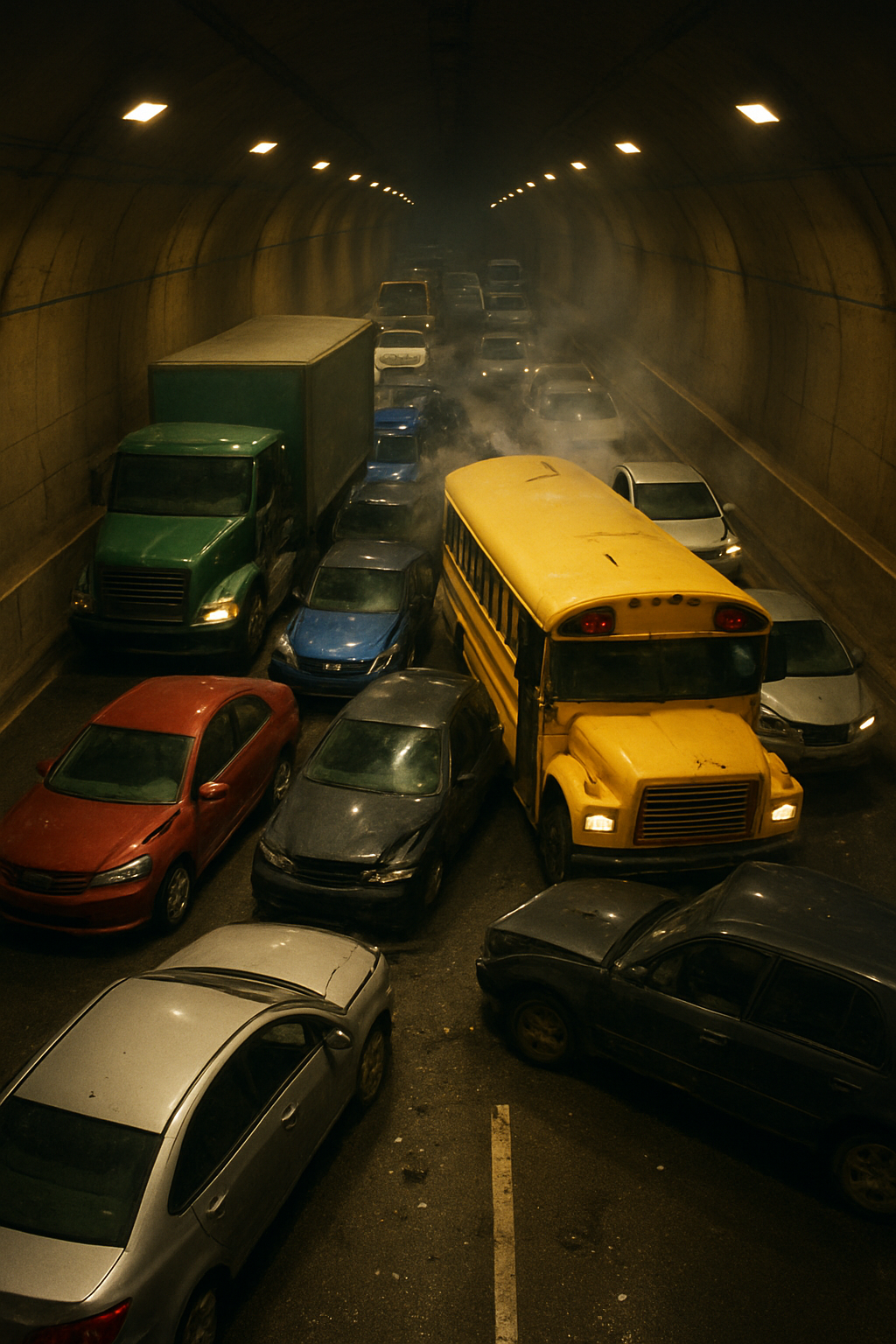
The accident was captured from a high-mounted tunnel camera, offering a comprehensive bird’s-eye view of the chaotic scene. From this perspective, one can clearly see the full scale of the accident: multiple vehicles—including cars, trucks, and buses—entangled at various angles, creating a dense, obstructed roadway. Each vehicle bears visible damage, from crumpled hoods and broken windows to minor dents, illustrating the impact of each collision.
The arrangement of vehicles shows how quickly an initial impact can escalate into a multi-vehicle pileup. Confined spaces like tunnels magnify the consequences of even small mistakes, as vehicles have limited room to maneuver, and the sudden stop of one vehicle can trigger a domino effect.
Vehicles Involved and Their Conditions
This accident involved a wide range of vehicles, emphasizing the unpredictability of tunnel collisions. Sedans, SUVs, trucks, and buses, in various colors and sizes, were scattered across multiple lanes. Some vehicles are pressed together so tightly that distinguishing one from another is difficult at first glance.
Debris, including shattered glass, twisted metal, and broken plastic parts, is spread across the tunnel floor. Tire skid marks crisscross the asphalt, indicating frantic braking attempts and sudden maneuvers. The mixture of vehicle types and collision angles demonstrates how tunnel accidents can create complex, chaotic scenes, often requiring careful analysis for accident reconstruction.
Lighting, Shadows, and Tunnel Atmosphere
Tunnel lighting plays a critical role in shaping the visual impact of this accident. Overhead lights reflect sharply on the metallic surfaces of damaged vehicles, creating dramatic shadows and highlights that emphasize dents, scrapes, and broken glass. A subtle haze of smoke and dust fills the tunnel, adding to the tense, realistic atmosphere.
This environment provides a stark contrast to open road accidents: in tunnels, confined space, low lighting, and reflective surfaces can make navigation and reaction more difficult. Observers of this footage can gain a clearer understanding of how environmental conditions contribute to accident severity.
No People, Full Focus on the Scene
Interestingly, there are no visible people in the camera footage, keeping attention entirely on the vehicles and the aftermath. This perspective allows for detailed analysis of the accident dynamics, including vehicle positions, impact points, and lane blockages. Observing the scene from above highlights how congestion and chaos can unfold in moments, underscoring the danger posed by sudden accidents in confined spaces.
Step-by-Step Accident Reconstruction
Based on the visual evidence, the accident can be broken down into several stages:
- Initial Impact: One vehicle likely lost control or misjudged the braking distance, colliding with another vehicle and setting off a chain reaction.
- Secondary Collisions: Nearby vehicles attempted evasive maneuvers but ended up colliding with others due to limited tunnel space.
- Pileup Formation: Multiple vehicles became entangled at various angles, blocking several lanes entirely.
- Debris Scattering: Broken glass, metal fragments, and tire skid marks spread across the tunnel, creating hazards for subsequent vehicles.
- Atmosphere of Chaos: Smoke, dust, and lighting reflections intensified the dramatic scene, making navigation nearly impossible until emergency services arrived.
This reconstruction emphasizes how every second counts in tunnel accidents and why preventative measures, such as maintaining safe following distances and adhering to speed limits, are essential.
Safety Lessons for Tunnel Driving
Tunnels present unique hazards that require heightened awareness:
- Reduced Visibility: Dim lighting and reflective surfaces can create optical illusions or hide obstacles.
- Limited Space: Narrow lanes make evasive maneuvers difficult, increasing the risk of multi-vehicle collisions.
- Rapid Traffic Buildup: Accidents can quickly block multiple lanes, trapping vehicles and delaying emergency response.
- Emergency Preparedness: Knowing the locations of emergency exits, pull-off areas, and tunnel communication systems can save lives.
Drivers are urged to reduce speed, avoid distractions, and maintain safe distances, especially when entering or navigating tunnels.
Emergency Response Considerations
Emergency personnel face unique challenges in tunnel accidents:
- Access: Confined lanes and entangled vehicles make it difficult to reach the injured quickly.
- Visibility and Lighting: Smoke, dust, and low lighting complicate rescue operations.
- Traffic Management: Redirecting traffic or clearing lanes in tunnels requires precise coordination.
- Safety of Responders: First responders must navigate hazards such as debris, broken glass, and leaking fluids while attending to victims.
Proper planning, training simulations, and tunnel safety infrastructure are crucial to minimizing casualties and speeding up rescue efforts.
Statistical Context
According to traffic safety reports in the United States:
- Tunnel accidents, though less frequent than open-road collisions, tend to be more severe due to limited escape routes and compounded collisions.
- Multi-vehicle pileups are a common feature in confined spaces, often involving 3 or more vehicles.
- Reduced visibility, poor lighting, and high speeds are recurring contributing factors.
Understanding these patterns allows drivers and authorities to implement preventive measures and improve overall tunnel safety.
The Dramatic Impact of Tunnel Accidents
This high-angle footage emphasizes the dramatic and dangerous nature of tunnel collisions. Each vehicle’s position, the scattering of debris, and the interplay of light and shadow convey a strong sense of urgency, risk, and chaos. While no people are shown, the visual intensity of the scene communicates the potential human consequences of such accidents.
Observing accidents like this can inform public awareness campaigns, driver training programs, and emergency preparedness initiatives, ultimately aiming to reduce similar incidents.
Conclusion
The chaotic tunnel accident in the USA, captured from a high-mounted camera, provides a comprehensive view of a multi-vehicle collision in a confined environment. With detailed analysis of vehicle damage, debris patterns, and tunnel conditions, this incident serves as a stark reminder of the dangers associated with tunnel driving. Drivers must exercise caution, remain vigilant, and adhere to safety guidelines to prevent similar catastrophic events.
By studying accidents like this, both drivers and authorities can enhance road safety measures, optimize emergency response strategies, and reduce the frequency and severity of future tunnel collisions.