Listed for just $25,000, this property offers approximately 3.2 acres of land in a secluded, tree-filled setting, with a single-story house that was affected by flooding during the 2020 dam failure. The listing makes an important distinction: the existing house is considered to have no value, and the property is being presented primarily for its land and potential recreational use or future building possibilities.
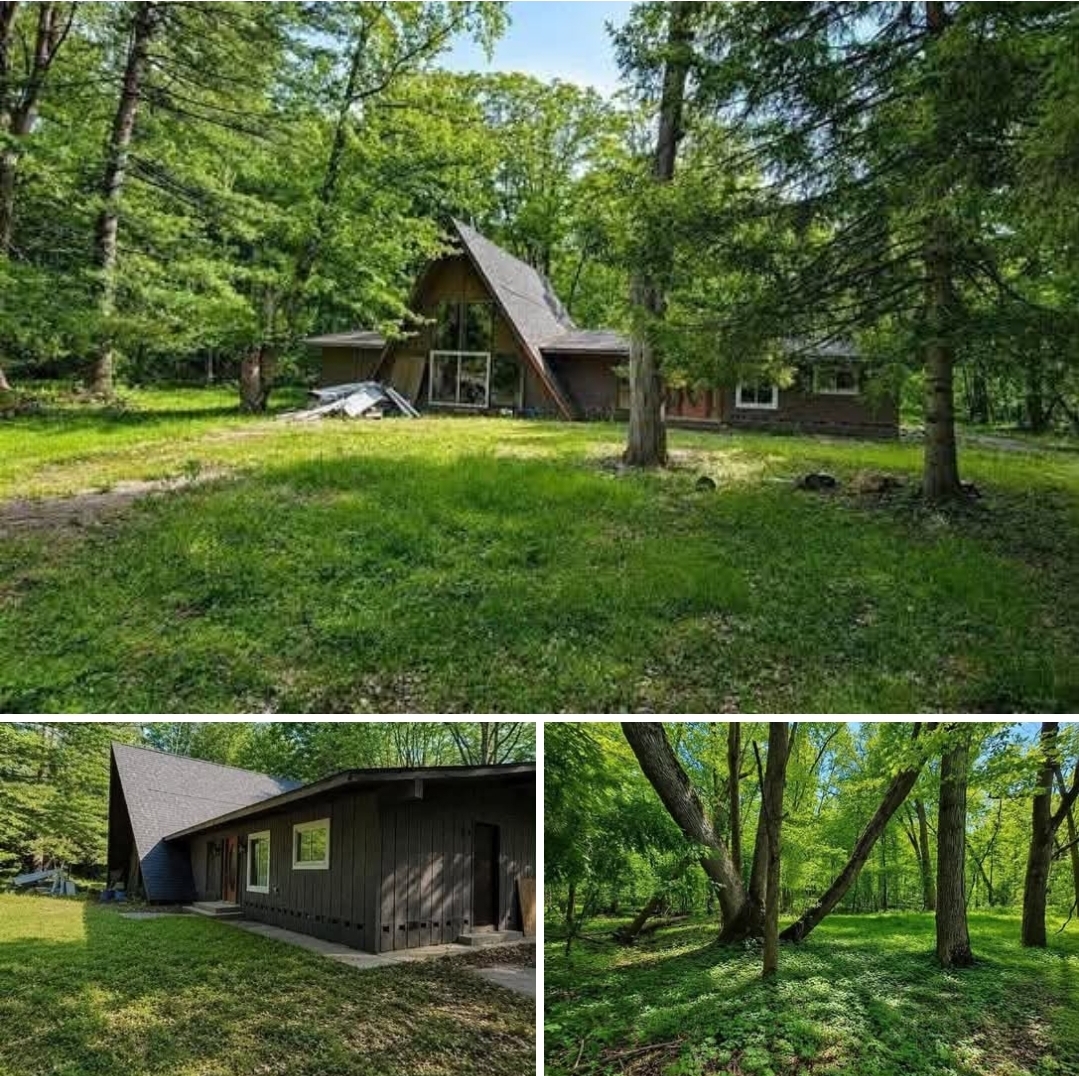
The photographs show a distinctive A-frame-style roofline combined with a lower, extended section of the house. Mature trees surround the property, creating a wooded atmosphere with a grassy clearing around the structure. The images also show the home from different exterior angles and a peaceful, tree-covered section of the land.
Although the house is listed with three bedrooms, two bathrooms, and approximately 2,016 square feet of living area, those figures should not be interpreted as evidence that it is currently habitable. According to the listing, the home flooded in 2020 and holds no value. Buyers should approach this as a land-focused opportunity and independently determine whether the existing structure can be removed, repaired, or otherwise addressed under applicable requirements.
Property Overview
- Asking price: $25,000
- Land size: Approximately 3.2 acres
- Bedrooms listed: 3
- Bathrooms listed: 2 full bathrooms
- House size listed: Approximately 2,016 square feet
- Year built: 1974
- Property type: Single-family residential parcel
- Setting: Wooded, secluded surroundings
- House condition: Flooded during the 2020 dam failure; listing states that the house has no value
- Flood risk: Most of the property is reported to be within the FEMA 100-year floodplain, except for an area extending approximately 160 feet from the road
- Water: Well listed
- Sewer: Septic tank listed
- Foundation: Crawl space
- Heating: Natural gas and forced air listed
- School district: Freeland Community School District
- Homeowners association: None listed
A Wooded Setting with a Secluded Feel
One of the most noticeable features in the photographs is the property’s natural setting. Mature trees stand throughout the grounds, while a grassy clearing surrounds the existing structure. The combination of open lawn and wooded areas gives the parcel a more private, natural appearance than a typical closely spaced residential lot.
The tree cover creates visual separation from the surrounding area, although the actual degree of privacy and the location of neighboring properties should be confirmed during a site visit. Buyers interested in land for recreation may appreciate the wooded atmosphere and the opportunity to explore how the property is arranged.
The images show a mixture of green grass, established trees, and shaded areas. These visual characteristics may appeal to someone looking for a parcel where nature is a central part of the setting. However, any proposed use must account for the property’s floodplain status and other applicable land-use restrictions.
What the Listing Photographs Reveal
The exterior photographs provide useful visual context for understanding the property. The main image shows the existing home nestled among mature trees, with a prominent sloping roofline and a lower section extending to one side. The building has wood exterior materials and a design that resembles an A-frame in part, although the listing does not formally identify its architectural style.
The additional exterior view shows more of the long side of the structure, including windows and the extended roofline. Another photograph focuses on the surrounding woodland, where trees and ground cover create a natural, shaded environment.
These photographs help illustrate the property’s appearance, but they cannot establish the home’s structural integrity or whether its utilities and interior systems remain functional after the reported flooding. A professional assessment would be necessary to answer those questions.
The Existing House: Important Condition Considerations
The house was built in 1974 and is listed as a single-story structure with three bedrooms, two full bathrooms, and approximately 2,016 square feet of living space. However, the listing explicitly states that the house flooded during the 2020 dam failure and holds no value.
This information is central to evaluating the property. The listed bedroom count, bathroom count, and square footage describe the existing structure, but they do not establish that it can safely be occupied or economically renovated.
Potential buyers should not assume that the house is suitable for immediate use. Before making an offer, they should investigate the extent of flood damage, the condition of the foundation and framing, possible mold or moisture-related deterioration, and the status of electrical, plumbing, heating, well, and septic systems.
Depending on the results of those investigations, the appropriate course may involve removing the structure or exploring whether any form of rehabilitation is permitted and practical. The listing’s statement that the house has no value should be taken seriously when assessing the asking price.
Approximately 3.2 Acres to Evaluate
The parcel contains approximately 3.2 acres, giving buyers a larger area to assess than a conventional small residential lot. The land includes wooded surroundings and a clearing around the existing house, as shown in the photographs.
For a buyer interested primarily in land, the important questions concern what can legally and practically be done with the parcel. Potential recreational use or future building possibilities are mentioned in the listing, but neither should be assumed to be automatically permitted.
Before purchasing, buyers should verify the boundaries, survey information, access, zoning or other land-use rules, and any restrictions associated with the floodplain. They should also determine which areas are usable for their intended purpose and whether any approvals would be required for construction, grading, clearing, or other work.
Floodplain Status Is a Major Factor
The listing states that most of the property lies within the FEMA 100-year floodplain, with the exception of an area extending approximately 160 feet from the road. This is one of the most important considerations for anyone evaluating the parcel.
A property described as being within a 100-year floodplain has an identified risk of flooding; the term does not mean flooding occurs only once every 100 years. Flood risk, building requirements, insurance considerations, and development restrictions depend on the precise location, elevation, and applicable regulations.
Buyers should confirm the property’s flood zone using current official flood mapping and seek guidance from the relevant local authorities before planning any construction. They should not assume that the portion described as outside the floodplain is automatically suitable for a new home without further verification.
The history of flooding during the 2020 dam failure makes this investigation especially important. A site visit, flood-history review, and professional assessment can help clarify the risks and limitations associated with the land.
Potential Recreational Use
The listing identifies recreational use as one possible direction for the property. Its wooded setting and open areas may appeal to buyers seeking a place to spend time outdoors, provided the intended activities are permitted and appropriate for the site.
Possible recreational plans might include enjoying the natural surroundings or using permitted portions of the land for low-impact outdoor activities. However, the floodplain status and previous flooding history should guide any decisions about equipment, structures, storage, access, and seasonal use.
Buyers should also determine whether any environmental, access, drainage, or land-use restrictions apply. The parcel’s appearance alone cannot establish that every part of the land is suitable for a particular activity.
Future Building Possibilities Must Be Verified
The listing presents the parcel as having potential for a future building project, but this possibility requires careful verification. The fact that a house previously occupied the property does not guarantee that a replacement dwelling can be constructed in the same location or that current building standards will permit it.
Before committing to a purchase, a buyer should contact the relevant local building and planning authorities to confirm whether residential construction is permitted and what conditions would apply. These questions may include floodplain elevation requirements, setbacks, access, drainage, foundation design, utility availability, and any required permits.
A surveyor, qualified building professional, and appropriate local officials can help establish whether a proposed building site is feasible. Buyers should obtain clear answers before budgeting for a new structure or treating the land as a buildable homesite.
Well Water and Septic System
The listing identifies a well as the property’s water source and a septic tank as its sewer system. These existing utility details may be relevant to evaluating the parcel, but they should not be interpreted as confirmation that either system is currently safe, functional, or suitable for future use.
Because the house experienced flooding, buyers should investigate whether the well has been affected by floodwater and arrange appropriate water testing before considering it safe for use. They should also have the septic system inspected by a qualified professional to determine its condition and whether it complies with current requirements.
If a new home is planned, the buyer should confirm whether the existing well and septic system can legally and practically serve the proposed development. Replacement or upgrades may be required, and the costs could materially affect the overall investment.
Natural Gas and Other Utilities
The property information lists natural gas and forced-air heating for the existing home. However, because the listing says the house has no value following the flooding, buyers should verify the condition and status of all utility connections rather than assume they are operational.
Electric service, gas availability, connection requirements, and any costs associated with restoring or establishing utilities should be confirmed directly with the relevant providers. If the current structure is removed or a new one is built, utility arrangements may need to be reconsidered.
Location in the Freeland Community School District
The property is listed within the Freeland Community School District. This information may be relevant to buyers evaluating the broader residential area, although school assignment and eligibility should be confirmed directly with the district.
The listing describes the property as being near the Tittabawassee area. Buyers interested in the surroundings should independently review the exact location, access routes, nearby services, and local flood-related information before deciding whether the setting suits their needs.
Price and Financial Evaluation
The asking price is $25,000 for approximately 3.2 acres. The listing also reports an annual property tax amount of $3,092 and a tax-assessed value of $231,800. These figures should be verified with the appropriate local authorities, particularly because the assessed value may not reflect the current condition of the land and the listing specifically states that the house holds no value.
The low asking price should be evaluated alongside the property’s flood history, the reported floodplain coverage, the condition of the existing structure, and the uncertainty surrounding future development. Buyers should budget for professional inspections, surveys, possible demolition, utility evaluations, and any required approvals.
It would be unwise to base a purchase decision solely on the listed price or the presence of an existing house. The actual value of the opportunity depends on the land’s permitted uses, physical conditions, access, and the cost of making the site suitable for the buyer’s plans.
Questions Buyers Should Answer Before Making an Offer
- What can legally be built? Confirm whether a new residence or other structure is allowed and identify all relevant floodplain and building requirements.
- Where is the usable area? Verify the exact location of the approximately 160-foot area described as outside the floodplain and confirm its dimensions and suitability.
- What is the condition of the house? Obtain professional advice about flood damage and whether demolition or rehabilitation is appropriate.
- Are the well and septic system usable? Arrange inspections and testing rather than assuming the systems remain functional.
- What utility connections are available? Confirm electricity, natural gas, and any connection or restoration costs with the relevant providers.
- Are there additional restrictions? Investigate zoning, permits, easements, access rights, and environmental requirements.
- What are the total ownership costs? Verify current property taxes and consider maintenance, inspections, cleanup, and any required work.
- Is the intended recreational use permitted? Confirm the applicable rules before planning activities, storage, or new structures.
Who Might Consider This Property?
This property may attract buyers who are specifically looking for a land-focused purchase and who understand the importance of floodplain research and due diligence. It may also interest people who want to investigate a recreational parcel rather than buy a conventional move-in-ready house.
It is less suitable for someone who needs an immediately habitable home or who expects to begin construction without first obtaining clear information about flood risk and building eligibility. The listing’s statement that the house has no value makes it essential to evaluate the land independently from the existing structure.
Final Thoughts
Listed for $25,000, this 3.2-acre property offers a wooded setting, a grassy clearing, and a location near the Tittabawassee area. The photographs show a distinctive existing structure surrounded by mature trees, but the listing clearly states that the house flooded during the 2020 dam failure and should be considered to have no value.
The most important factor is the property’s floodplain status: most of the parcel is reportedly within the FEMA 100-year floodplain, with only the area described as extending approximately 160 feet from the road excluded. That detail could substantially affect the property’s possible uses and any future building plans.
For an informed buyer, the next step is not to assume that the house can be restored or that a new home can be built. Instead, it is to verify the flood map, permitted uses, boundaries, utility conditions, well and septic status, and any requirements for demolition or new construction. Only after those details are confirmed can the true potential and total cost of this land opportunity be assessed.